Monday, October 28, 2013

Turmeric vegetarian fried rice - beat the monotony

Hello!

The spotlight ingredient for this week is turmeric! I did a previous post on lemongrass about a month ago, but it's time to branch out and try something new.

MOH and I were walking through our local farmer's market looking for new things to try when we saw a bunch of people crowded around a particular stand with their heads deeply immersed into picking things into their plastic bags. When I stepped closer, I noticed it was fresh turmeric! If your only experience of seeing turmeric is in a spice jar, turmeric in its raw form looks like little tiny nubbins. It normally comes in two flavors, white turmeric and yellow turmeric (the yellow being the one most people are familiar with). Depending on how strong of a turmeric flavor you want, the white turmeric is much more tame.


Turmeric is in the same family as ginger, and is often cited as having beneficial health effects similar to its sister counterpart in promoting wellness and warding off the progression of diseases like cancer and Alzheimer's (try typing in "turmeric health benefits" on Google or the National Institutes of Health website Pubmed and you'll get a wide array of scientific articles). Turmeric is widely used in Indian cooking, where it originated, and is often a main ingredient in curry. What some people don't know is that turmeric is sometimes substituted in place of saffron. What exactly does turmeric taste like? Some would say it has an earthy, spicy mustard-y taste with a subtle heat at the end (similar to what happens when you eat ginger).

I was really excited to see turmeric in its raw form and decided to do something different with it other than make curry. How about FRIED RICE?!?! Who can say no to fried rice? Especially after a long day of doing nothing but veg out in front of the TV (there was an Alien marathon as well as Modern Family, so we couldn't resist).

I like to make kimchi ginger fried rice usually, but decided to branch off and substitute turmeric with ginger instead. The results were a success (at least between MOH and I). The key to this dish is dicing the turmeric such that in every bite of the dish, you get a good helping of turmeric that packs a punch at the end.


Ingredients:
- 1 cup of diced fresh yellow turmeric
- 4 garlic cloves, diced
- 1 yellow onion, diced
- Half a bag of frozen vegetables (alternatively, you can dice 1 cup each of carrots, peas, corn and broccoli)
- 3 eggs
- 3 cups of cooked rice (brown or white, your choice)
- 1 cup of chopped green onions and cilantro
- 1 tbsp of soy sauce (season with fish sauce if you want a saltier bite)
- Salt and pepper to season


Protocol:

1. Heat a wok with 1 tsp of oil
2. Scramble eggs and set aside (can either cut the eggs into cubes or just take a spoon and mash crudely to get several pieces)
3. Add 1 tsp of oil and once hot, sautee the garlic and turmeric until garlic turns light brown
4. Add in vegetables, or if using frozen vegetable pack, first add in onions
5. Once onions translucent, add in frozen vegetables and sautee mixture until frozen vegetables are heated through
6. Add in rice, soy sauce and seasoning - mix thoroughly
7. Add in eggs and fold into the fried rice mixture
8. Garnish with green onions and cilantro
9. Scarf down like a zombie while you enjoy your last few hours of the weekend

A super simple dish that packs quite the punch thanks to the turmeric. If you're into this comfort food, spicing it up with turmeric will definitely lift the predictability of this dish and add a great heat at the end!

Until next time, happy eating all!

Sunday, October 20, 2013

Changing my senses to take the bitterness in stride

I've been upping my consumption of tea and coffee lately - mostly due to the weather changes (it's starting to look like fall here in Orange County!), but also due to looming deadlines that keep on piling up.

Photo courtesy of Onpuichunsen
I used to have to drink my coffee with loads of cream and sugar, and I'd normally take my tea with a generous helping of honey (trust me, green tea and honey > airborne in warding off a cold). Now, I can get away with coffee with some sugar, and even some black tea without honey (though honey's always welcome).

Your body has a great way of adapting to bitter tastes if necessary. Take bittermelon, or even chinese brocolli (Gai Lan) - I used to hate eating these as a kid, but my mom would make me eat a bowl of these veggies in soup form before leaving the dining table. Now, when I see these items at the farmer's market, I try to have these vegetables circulate my kitchen a couple times a month. I mean, who could resist stuffed bittermelon soup?! Most people have had gai lan while out eating dimsum - it's normally generously lathered/masked in this sumptuous oyster sauce and tastes so sweet. Gai lan in its natural form is actually the complete opposite - in the same family as brocolli, this leafy green is packed with a bitter punch. I actually prefer to steam my gai lan, or use it in a very simple shrimp soup broth over rice.

Gai lan as most people enjoy it (photo courtesy of Stu)

While it's been long established that we adapt to eating certain things for the sake of reaping the nutrients of the food, the actual "sciency" rationale behind how our brain allows us to overcome this is something more of a black box of mystery.

Recently, researchers published a cool study in Science that looked at how animals may be adapting to bitter tastes over time using.... FLIES! Okay, don't stop reading from here. Flies are pretty awesome. If you look at early developmental work, there's a ton of crazy stuff that has been discovered using flies as the animal model (such as the discovery of hox genes - these genes are important for determining how to organize body segmentation).


Despite the prevalence of a majority of neuroscience work in mice and rats, flies haven't dropped off just yet (haha, get it?). With regards to sensing food, flies are great to use for taste research since they have multiple receptors on their body that can sense different flavors - they have a ton of tiny hairlike fibers called gustatory sensilla that have different food receptors. In this study, researchers looked at the flys' ability to adapt to consuming camphor, a bitter compound that tastes like a cross between a menthol cough drop and spoonful of cinnamon (yum). What they found was that over time, flies adapted to eating camphor, but it was a result of having less of a receptor that detected that bitter compound, in this case TRPL. So did the receptor disappear forever, go on a temporary hiatus, or what? As it turns out, the amount of receptor present was being controlled - depending on consumption of the bitter compound, there would either be more or less of the receptor present. So depending on your diet, the particular receptors can be ever changing helping you blunt or heighten your responses to detecting a particular taste. This study was only done with camphor, and they found that other bitter compounds had no effect on the receptor levels, suggesting that the actual regulation of flavor detection varies considerably on what receptor you have in the sensing environment.*

This study is fairly new, and not much has been done on the human forefront, but it would be interesting to see if regulation of your tasting environment is as dynamic as the fly's. Whether it's a mind over matter type situation for humans, or if there's actually chemical regulation to control how much bitter, sweet, or salty we can handle, it's still something to keep in mind. MOH can serve as a great example to this - when we first met, he declared a few things that he'd never stand for:

1. Swimming (he'd taken tons of lessons and could never float)
2. Doing high intensity cardiovascular activity
and
3. Eating bittermelon / durian in any form, whether it's soup-ified or in ice cream form

It's been a long journey with him and there's considerable progress on his end - he will eat bittermelon if it's sauteed with some onions and eggs, and enjoys spinning to loud EDM music. I can't say much about the exercise, but I think the gradual acceptance of bittermelon has something potentially to do with a rewiring or remodeling of the chemical environment in his mouth. No status on the durian - he still thinks it smells too much like feet to enjoy.

So much hate for durians - even they need love!


Until next time, happy eating all!


***The actual molecular mechanism behind regulation of the TRPL channel is through a Ube3a mediated ubiquitination and degradation of TRPL.

References:

Zhang YZ et al., 2013. Food experience - induced taste desensitization modulated by the Drosophila TRPL channel. Nature Neuroscience. 1468-1476

Sunday, October 13, 2013

Humanese cuisine, vegan Sunday fun

These past two weeks have been hectic.

The academic quarter has started, meaning there's tons of undergraduates on campus walking everywhere, including in the bike path (thanks cell phone talker for making me veer quickly to the left!). With the fall quarter starting, that also means I'm starting to teach again. I have a love/hate relationship with teaching - I love science education / community outreach, but HATE the grading that it entails.

Needless to say, I fell off the bandwagon of my once a week postings, but I'm back! This weekend was jam packed with going into lab, working on teaching material, blowing and repairing my car battery, heading to the comic shop, to finally, getting to try a great vegan restaurant in Fountain Valley that has been on my "must-eats" for awhile now.

Au Lac is a cozy restaurant that showcases Vietnamese dishes with a vegan flair. They promote "humanese" cuisine, an idea coined by the chef there, which is the idea that humans and animals are all the same deep down. Hence, in order to fully appreciate life, humans need to appreciate others around them (humans, animals, and plants alike). *Note, I'm not advocating veganism to anyone, for what anyone eat is a personal choice, but just wanted to give some background on what "humanese" means.


One thing that really drew me to the restaurant was their specialty item "mam va rau" - an eggplant hot pot or seafood gumbo. This dish is so pungent. I think one reason why the dish isn't showcased in restaurants too often is because of the smell - it is very garlicky and fishy. I think you need an acquired taste to fully appreciate this dish - ask any Vietnamese person and they'll often say how much they like it, and comment on how stanky it can get. Despite the funky smell, it's so delicious. It's a very salty broth that you pour over rice noodles and vegetables and squeeze lime over to top it off - so tasty, and a great contrast of salty/sour in your mouth. The texture difference really plays well too - you have the soft sumptuous eggplant and fish that goes great with soft noodles and a medley of crunchy vegetables to top it.

I was really eager to try Au Lac's rendition of mam va rau and when I tried the dish, it did not disappoint at all. Though tame in the funky smell, the broth was very flavorful and tasted exactly like the traditional mam dish that I grew up eating. Instead of meats and fishes, this dish had faux fish and tofu. The tofu and fish soaked up the broth flavor and had this intense umami taste to them.


Really great food here. I'm sad that I don't live close enough to go here more frequently! Hope everyone's meals this weekend are as good as the one I just had!

Happy eating all!


Sunday, September 29, 2013

Peanut butter indulgence - eating beyond the breaking point

In honor of the Breaking Bad finale (boo), MOH and I made a special dinner of mushroom risotto and decided to indulge in one of our favorite things to snack on: peanut butter. MOH made peanut butter cookies with little cacao nibs inside - so delicious. We were worried about the cookies being too rich or dry, but these cookies were moist, had the right amount of peanut butter, and best part: were tasty! Most peanut butter cookies can be made without any flour and consist primarily of three ingredients: peanut butter, sugar, and an egg. MOH's rendition of these cookies have a slight modification of sugar, cacao nibs (for a crunchy texture), and baking soda.

Ingredients:

1 cup peanut butter
1/2 cup truvia 
1 egg
1/4 cup cacao nibs
1 tsp baking soda

Protocol:

1. Preheat oven to 325°F. Line baking sheet with parchment paper
2. In a mixing bowl, mix all ingredients until smooth. Chill dough in refrigerator for 30min
3. Using hands, roll dough into 1" balls and space ~1" apart on the parchment paper. Flatten with a fork
4. Bake for 8min in the oven. Cool on the baking sheet (not a cooling rack).
5. Eat them all! 


These cookies are addicting. The recipe makes 36, but now, there's only 9 sad cookies left on the rack. I'm full, yet I'll eat a cookie nonetheless. I'll sport my cookie belly, run for a few more minutes, just to console myself that eating that extra cookie is worth it.

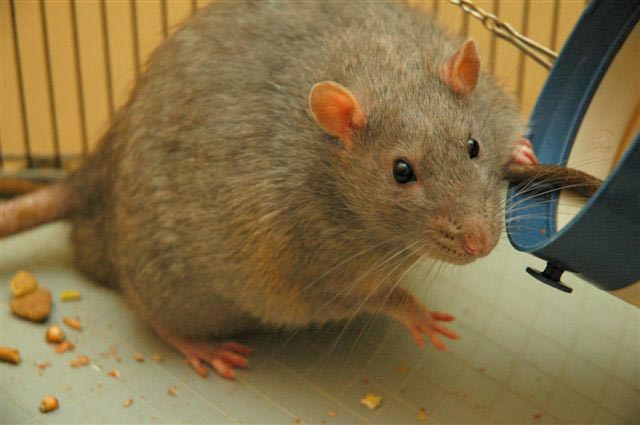
Rat that's had one too many crackers! (Photo courtesy of J. Servaes)
This week in Science, researchers published some really cool stuff on what motivates feeding behavior, whether an animal is starved or satiated. In a nutshell, researchers manipulated a pathway in the brain that is responsible for mediating feeding and observed how activation or inactivation of the pathway affected whether a rat would go for food. What they found was activation of the pathway led the rat to eat more, even when the rat was full . Conversely, inactivating the pathway led rats to eat less, even if rats were starved. For more science, scroll down to *.

Pretty crazy stuff, considering activation of a particular pathway in the brain can induce eating beyond satiation in an animal. According to this article, this is the first identified pathway that can modulate feeding behavior.

One thing that comes to mind is how many of us will reach for those extra cookies or chips even though we're way full off dinner. I think an interesting direction to go would be if this pathway mediates all types of feeding behavior or if there's a differential pathway for fatty foods, salty foods, sweet foods.


*
In this article, researchers investigated the pathway that has been implicated towards dictating feeding behavior. This pathway of the brain is called the the bed nuclei of the stria terminalis (BNST) and the lateral hypothalamus (LH). The cells in the BNST that connect to the lateral hypothalamus are primarily gabaergic inhibitory cells.

In this study, researchers used optogenetics (a method to modulate brain activation or deactivation by stimulating light on the brain region) to activate or block the pathway from the BNST to the LH. Specifically, they targeted the cells that projected from the BNST to the LH and looked to see whether rats would preferentially go to the corner of a room that either had food or was empty. Upon stimulation of this pathway, rats would preferentially go to the food corner.

In a separate test, they wanted to see if behavioral output would be changed if the rats were either full or starved. Even when rats were full, stimulation of this pathway caused the rats to continue consuming the food. In contrast, rats that were starved would not consume food if they inactivated the BNST-LH connections.


Reference:
Jennings JH et al., 2013. The inhibitory circuit architecture of the lateral hypothalamus orchestrates feeding. Science. 341(6153): 1517-21.

Sunday, September 22, 2013

Bitter grilled cheese sadness, woes of the supertaster

So my Saturday evening wrapped up with MOH spitting out something I made.

MOH has this super affinity for anything cheesy. As a kid, he took full advantage of his karate days and would blow off his caloric burn by frying up cheese in a pan. It sounds really gross, but I've actually tried it and it's a pretty good cheesy crisp. He's not one to say no to a good Mozzarella stick and every night likes to have either a cheese quesadilla or grilled cheese sandwich. Neither of these is truly legit though - I like to make quesadillas by melting the cheese in a microwave, and make the "grilled" cheese by placing the sandwich in an oven until the cheese melts.

So come Saturday, and MOH just finished dinner but was still hungry. He asked for a grilled cheese and I decided to get all "fancy" and use some of my caramelized onions to place inside of his sandwich. We have some Port Salut cheese and it's a great melting cheese. It's really soft and has this great salt taste to it. It's not as salty as Manchego, and reminds me of Mozzarella in texture, but has a much milder flavor than Mozzarella.


Port Salut is probably MOH's favorite cheese. I prefer my cheeses to be more salted and hard (like a good Cheddar or Parmesan), but for MOH, Port Salut is it.

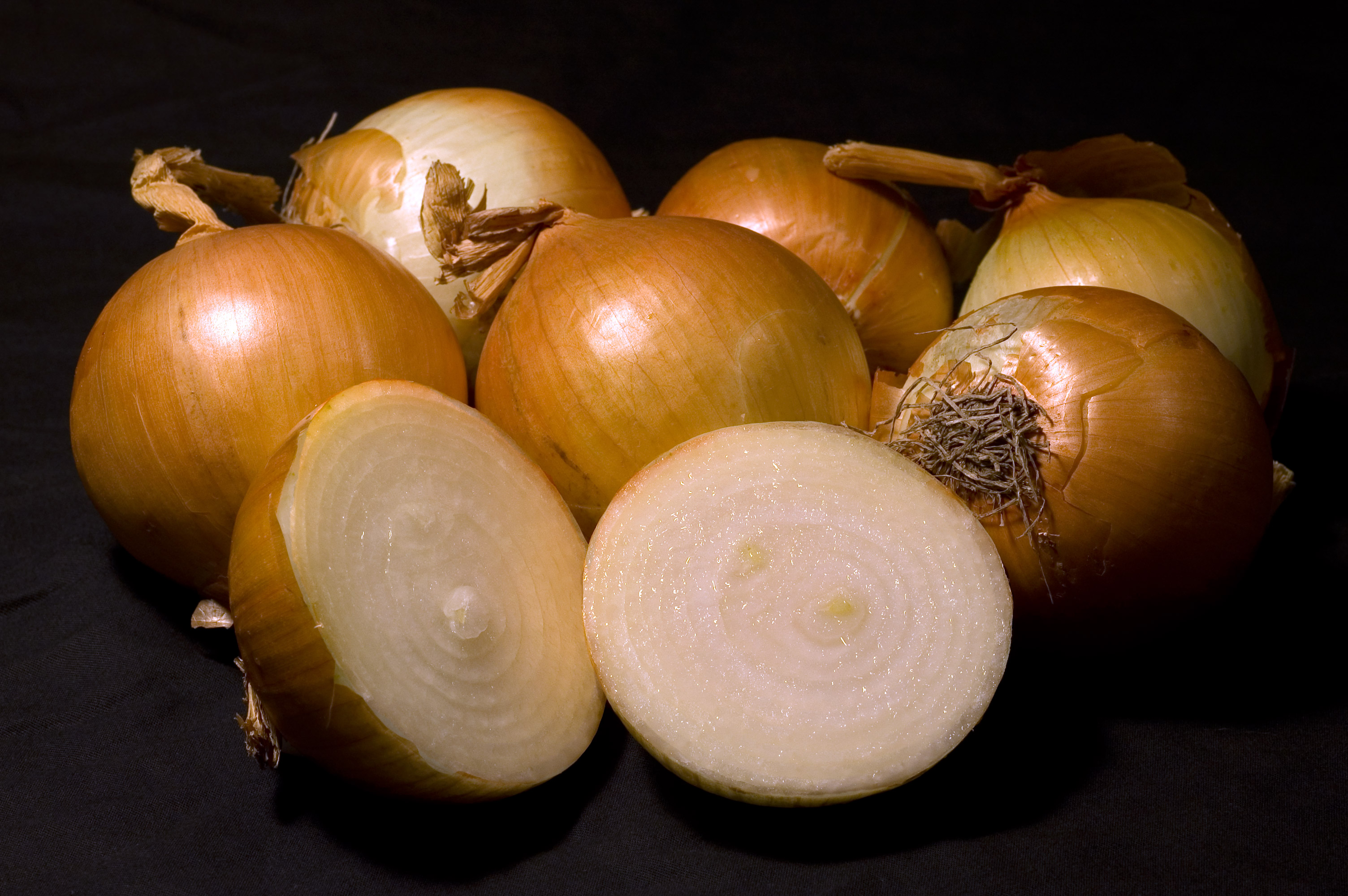
So I did this informal grilled cheese using wheat multigrain with a thin layer of cheese, caramelized onions, and thinly sliced raw yellow onions. I threw the sandwich in the oven on top of a makeshift foil boat and waited until the cheese had melted. 

MOH took one bite, and immediately was all "Whew, that is BITTER!" Anyways, he continued to eat the sandwich after removing the bits of raw onion. 


Some people are just extremely sensitive to bitter tastes, or other tastes for that matter. You sometimes hear or read about people who have heightened senses (either they were born with it, or had some sort of overcompensation from losing another sense), but is there any scientific basis for this? 

I actually came across the idea of a "supertaster," the ultimate connoisseur. It's a real thing scientifically, too (Reed DR, 2008). Supertasters were first identified as having the ability to detect a bitter chemical, 6-n-propylthiouracil (otherwise known as PROP) at a particular concentration. Subjects either were unable to detect this bitter taste, while others found it extremely bitter and offputting - researchers designated the subjects who could detect the bitter compound as "supertasters." Besides heightened bitter taste perception, supertasters are also able to detect subthreshold levels of other taste compounds. 

Besides a heightened response for detecting such chemical compounds like the bitter taste, supertasters are also able to discriminate minutia changes in ingredient levels (Hayes JE and Keast R, 2011).  

While the actual genetics behind what makes supertasters detect subthreshold levels of food chemicals is still under question, there are some possible mechanisms that may account for this super ability:

- Mutations in channels responsible for sensing flavors - interesting idea, especially considering an older article that spotlighted "supersmeller" mice that had mutations in a potassium channel that caused them to have a heightened sense of smell (Fadool DA et al., 2004).

- A heightened gain or amplification of the neural signal that sends chemical information to the brain 

Whatever the actual reason, it's still a pretty cool idea. Another interesting idea is how learning/memory can play a role in becoming a supertaster. I'm sure being a supertaster goes far beyond genetics (I mean, science has shown that genetics are really only a starting point for how our bodies develop). Not everyone is designated the coveted title of "supertaster," but I'm sure that after repeated bouts in the kitchen, almost every home cook should have some sort of super threshold ability to detect when their special dumpling soup needs an extra dash of spice.


***Redemption came through Sunday - I made another grilled cheese, this time upping the ante by sauteing mushrooms and yellow onions together, and slabbing some good ol' cheese on top - success!


References: 

Fadool DA et al., 2004. Kv1.3 channel gene-targeted deletion produces "Super-smeller mice" with altered glomeruli, interacting scaffolding proteins, and biophysics. Neuron. 41(3): 389-404.

Hayes KE and Keast J,  2011. Two decades of supertasting: where do we stand? Physiology and Behavior. 104(5): 1072-74.

Reed DR, 2008. Birth of a new breed of supertasters. Chemical Senses. 33(6): 489-91. 


Saturday, September 21, 2013

Soup of the week - hu tieu (seafood noodle soup)

***Note: this blog post REEKS of laziness. It was a slow weekend, weather was too good to be productive, and hustling in the kitchen for a long period of time didn't seem so hot. Regardless of the effort required, the intent shined through!

The weather is finally cooling down, and it's a great time to make delicious soups to enjoy over a lazy weekend.

I went to visit family a couple weeks back and had my mom's yummy bun rieu and have been craving more soups lately.

MOH and I finally made the trek to our local asian grocery store, 99 ranch, and stocked up on a bunch of asian ingredients. We got more rice, fish sauce, sesame oil, beansprouts, and dried seafood. I was craving some hu tieu (seafood noodle soup) for a really long time (since seeing my family), but hadn't the chance to get the ingredients.


Hu tieu is my favorite noodle dish and probably within the top three of my favorite Vietnamese comfort foods. It is deep in flavor, and pretty healthy as well. The broth is very soup-y tasting in comparison to other noodle dishes in Vietnamese cuisine. Pho (beef noodle soup) for example, has a more sweet, anise flavor that you flavor with hoisin and sriracha, that isn't always the best to eat when you're feeling under the weather. Also, bun mam (Vietnamese seafood gumbo), though extremely flavorful, is naturally very salty, not to mention stinky (it's got high amount of garlic and fish). Hu tieu has the distinct advantage of just being a great soup base (dashi tasting) that you eat with noodles. Its soup is very versatile too, and can be made from the broth that you get after boiling a cut of pork meat, or conversely, leftover hu tieu broth can be used as a soup base for wintermelon or green leaf soup. 

I was pretty scared of trying to make this dish, but my mom consoled me and gave me the rough cut of how to make it. Most comfort foods don't rely on clear cut ingredients - my mom's cooking is no different. Never lacking in flavor, my mom cooks by pure intuition, often tasting in between trials, having spices on hand within immediate reach. The only downer to this is trying to figure out what goes into her delicious foods - I try following her around the kitchen and just see ingredients being thrown into large pots, stuff simmering in slurries of spice mixtures - with all the mental notes I'm taking, who knows if I caught the secret dash of five spice that goes into that sumptious beef curry?!?! Nonetheless, you keep watching, slowly taking in the environment happenings, stare into open pots and skillets trying to figure out what's inside and hopefully something sticks - HOPEFULLY. If not, you do a bunch of trials at home, trying to figure out what went into  that lemongrass mixture, and figure that the heat from the mixture wasn't from ginger, but turmeric and garlic... oh well, you live and learn right? 

Hu tieu is pretty simple to make in comparison with its more complex/time consuming sisters (pho and bun bo hue). While I haven't made my own batch of bun bo hue (vietnamese spicy beef noodle soup), pho traditionally is supposed to have a broth that's been slow simmered in beef chuck bones (my mom does overnight, though I've cheated and done a quick boil in 2 hours - gets the job done, but not nearly as flavorful or deep tasting as my mother's). Hu tieu can be done within 1 hour, which works great for anyone who doesn't want to sit around waiting for a broth to develop.

Ingredients:
- Garnishes: 
  • Three green onion sprigs, chopped
  • Small red onion, sliced longways, thin
  • Bunch of cilantro, chopped
  • Lime, sliced
- Soup base:
  • Chicken, pork or vegetable broth (can be made from scratch or used from a can)
  • Half a packet of dried shrimp
  • 5 little dried cuttlefish (or can use 2 dried squids)
- Toppings/noodles:
  • Shrimp with skin on, deveined (3 per person)
  • Shrimp balls (or seafood balls)
  • Sliced pork strips (optional - it's traditionally served with pork meat, but I prefer to not eat pork)
  • Sliced squid (also optional, but for today's recipe, I only have shrimp materials)
  • Bean sprouts
  • Chives
  • Green leaf lettuce
  • 1 large yellow onion, sliced longways thinly
  • Pho noodles (can also use the translucent hu tieu designated noodles - call me crazy, but I prefer the stringiness and texture of pho noodles)
Protocol:
First you want to make the broth. I was really lazy today, so I used two cans of chicken broth and filled my soup pot (a 50 quart size) halfway with water after adding in the chicken broth. You can make your broth from scratch or potentially use vegetable broth - just make sure it's seasoned enough. Then add in your dried shrimp and cuttlefish. (Note: if you go to the asian store, they sell dried squid, but it's 10 bucks for 4 dried squids - I was feeling adventurous and decided to go for the smaller cousin, the dried cuttlefish, which is half the price, and comes with way more. Cuttlefish looks exactly like squid, only smaller). Let the pot simmer for maybe 30 minutes at least and season the broth to make sure it's got this umami taste. The seafood flavor should come out after adding in the shrimp and cuttlefish.

While I waited for my broth, I made my caramelized onions - just simply  toss the onions into a hot skillet with some oil until the onions are browned/blackened. They should taste really sweet - this will go great as the topping. 


When your broth has been simmering a bit, add in the shrimp balls and shrimp - the shrimp will cook quickly - as soon as it floats, take out the shrimp and set aside. You also need to make the garnish that goes on top - simply combine green onions, red onion, and cilantro. This fresh mixture will add layers of flavor to your soup and can be made ahead of time and refrigerated until use.

When you're ready to eat, boil water in a small sauce pot to use for blanching your noodles. Once the water is boiling, take a bundle of the dried noodles and throw into the pot - the noodles will cook quickly, so remove the noodles with chopsticks or any utensil and throw in your bowl. Then add in your shrimp, meat toppings, and pour in your broth on top. Finish the soup with a generous layer of garnish and a sprinkle of your caramelized onions - simple. You can add in lime juice, and top with vegetables if you prefer, or eat it by itself - the broth should be flavored sufficiently to stand alone if necessary.

I always like to throw a huge topping of vegetables in my soup and throw in sliced thai chilis for heat.

Until next time, happy eating!


Friday, September 13, 2013

Salty and sour? Who'd a thunk - the versatility of lemongrass

Happy Friday!

I'm trying to incorporate postings on spotlight ingredients that are a must-have in my kitchen that not only taste great, but also are pretty darn healthy. Most of these items are asian-inspired ingredients that I've grown up eating; however, you'll find other postings on ingredients that are commonly used for vegetarian oriented meals (like my quinoa posting). 

This week, Food52 featured a column on lemongrass that really got me thinking about how great lemongrass goes with everything. Lemongrass regularly revolves around my weekly dinner menu (either infusing a hot and sour soup broth, sauteed with tofu or fish and served with rice, or sauteed with tofu and caramelized onions served over rice noodles and greens). Salty, sour, or savory, lemongrass can go with just about anything.


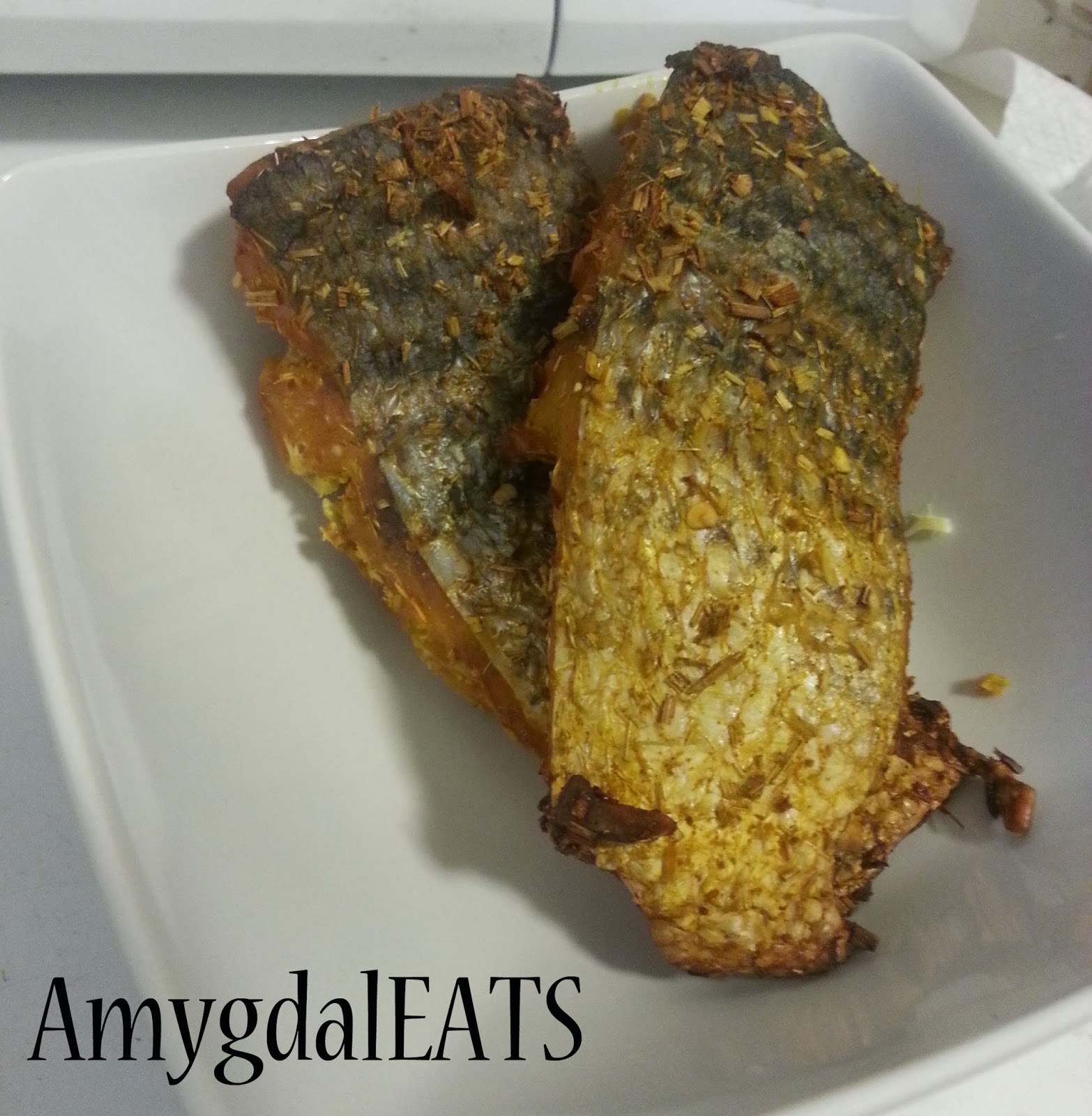
Me personally, I love a good stirfry/sautee tofu with thinly sliced lemongrass and garlic. It's got this great heat to it and has such a flavorful aroma, it's hard to beat. Alternatively, lemongrass goes great with fish and meats. Tonight's dinner menu featured a simple salad, rice and lemongrass marinated striped bass. So delicious.


My family loves to go fishing. My parents are avid fishermen and often spend their free time off work sitting out on the water, casting the line and waiting for a bite - sometimes, when night fishing is an option, my parents will stay out and just sleep under the stars. When I was younger, I would go out with my sisters out on the boat around 6AM and we'd freeze our butts off on the boat waiting for the sun to come out. Then, eventually when the sun would rise, my sisters and I would complain about the blistering sun in the afternoon and just we'd just snack on chips and ramen while my parents patiently waited for fish to come. Of the different types of catches, striped white bass was probably one of those fish that was just a pain to catch - they'd make you wait forever and tug on the line ever so slowly. If you decided to drift off, your line would be shot. While hard to catch, bass ranks in my book as one of the best white fish varieties to eat. Bass isn't as rich tasting as salmon, but has great flakiness when you boil or poach it, and get hearty texture if you bake or fry it.

One of the best ways to prepare bass  in my opinion, is to serve it salted. Simply soak the fish in salted water for an hour (just to get the salt to penetrate). It's a really simple preparation, but you can lightly fry the fish and serve it over rice or as an accompaniment with soup (wintermelon soup tastes great with salted fish on the side). 


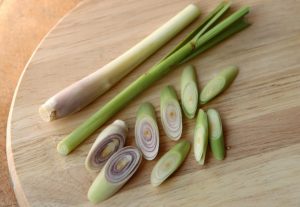
You can elevate salted fish even more by doing a spice rub mixture of lemongrass. Simply take lemongrass and slice or process it into tiny pieces (you can either do this laboriously with a knife, or use a food processor, your choice - I like to use a knife only because I hate cleaning the processor!). Then finely chop garlic and mix in garlic to lemongrass in a 1:1 ratio. To create a little more zest and heat, add in a few tablespoons of turmeric (if you have a cup of rub total, I'd add in 3 tbsps of turmeric. Random, the turmeric spice is also known to act as an antimicrobial, so this rub is helping to flavor your fish AND sanitize it further! If you're into spice, I'd mince thai chilis (2-3 or however hot you want it) into the mixture, or even throw in chili flakes. Mix this rub together to create a semi-homogeneous mixture of spice and slather the rub on top of the fish. 

Mix the rub thoroughly on the fish, making sure to cut into the nooks and crannies of the fish. You can choose to dehydrate the fish (like a jerky) or let the marinate stay for a bit before baking the fish or lightly frying it. 

If you choose to bake the fish, assuming you're dealing with a fillet size, simply bake in the oven at 400 degrees F for 25 minutes. Then, let the fish cool and serve over rice or a bed of greens.

Have other lemongrass recipes that are favorites in your house? Let me know!

Happy eating everyone!