Showing posts with label neuroscience. Show all posts

Sunday, January 18, 2015

Tackling mortality at the genetic level

Ever care for someone while they're sick?

MOH has been extremely sick for the past couple days (and counting) and has been putting the whole "in sickness and health" vow to good use. Aside from walking around like a zombie, coughing sporadically, and taking in tons of tea/soup, he's been moping around requesting that even if he dies, I stay unmarried.

MOH's constant death remarks got me to thinking about a question that we normally don't think about until we get much older... What determines our mortality? Is there a such thing as an elixir of life that can keep us our youthful selves, free of disease, free of aging? 

Immortality in art: "Four immortals saluting longevity" by Shang Xi
While life expectancy has gradually increased with the advent of technology and better health care, our life span has remained pretty constant (the maximum life span is currently ~120 years old). While this life span is quite long, other animals, even mammals, have been known to live longer. For instance, a large whale called the bowhead whale can live up to 200 years. In addition to a long lifespan, this whale species also has low prevalence of many diseases associated with aging. 
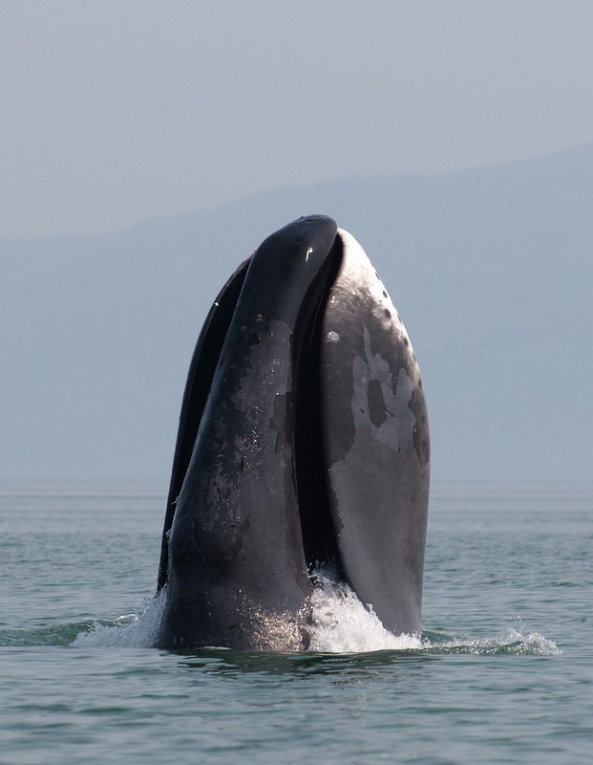
Bowhead whales can reach up to 20 meters in length and weigh up to 100 tons (photo courtesy of Olga Shpak)
Why so old and healthy? And is it possible that with today's technological advances, can we tap into some of those genes and maybe get clues as to why we don't live as long?

In a recent article published in Cell Reports, scientists have uncovered the genetic makeup behind why long-living mammals like the bowhead whales are able to live so long, disease free.

Scientists were able to map the genetic map (or genome) of this whale species and compared the bowhead gene map to another whale species that does not live as long (Minke whale which lives for about 50 years) and identified several genes that may be the reason for why these whales live so long. 

Not surprisingly, many age, cancer, pro-growth, and DNA repair genes were found in the bowhead whale. Some interesting genes that turned up were the gene called histone deacetylase 1 (HDAC), a gene that is important for packaging DNA, and excision repair cross-complementing rodent repair deficiency (ERCC1), which when mutated, affects the lifespan of rodents and accelerates the aging process.

It's an experiment taken right out of what seems like a mad scientist's brain, but how do you apply these genetic findings to humans? Finding natural ways that animals are able to live so long, disease free, offers us new ways to study how these same genes may be changed in humans. If we could understand how these genes work naturally (to ward off age-related disease), we can potentially figure out how to fight these same genes when they get funky and altered. Though it's a long stretch to believe that we can take a cocktail of assorted genes that are "anti-aging/anti-disease," it's definitely a possibility in the future (realistic or not, it's possible!).

Hope everyone's enjoying their weekend. In between caring for MOH, I've been making peanut butter energy bars that when frozen taste like frozen yogurt.... so good.

Until next time, happy eating all!


References:
Keane, M et al., 2015. Insights into the evolution of longevity from the bowhead whale genome. Cell Reports. 10: 112-122.


Sunday, December 21, 2014

Second wind for older flies - special food source can ward off memory problems

Why do spring cleaning when it's warm and you get all sweaty cleaning dirt and grime, when you can do winter cleaning right before the holidays?

Every year MOH and I prepare for our trip up North by turning our apartment inside out and doing a thorough clean. Sure we clean up every now and then, but a real good scrub down is few and far between. Things that we accumulated over the year are either removed or packed away, depending on if it's still useful. Sometimes we forget about how much dust, dirt, and junk piles up, but when the home is clean, a fog feels like it's been lifted. You can breathe a little easier, maneuver through the rooms faster, and find things easier.

Our bodies also do "winter cleaning" regularly. Through a process called autophagy, proteins or cell parts that are non-functional, defective, or not needed anymore, are removed with the help of our disposal center part of cells called the lysosome. This process is very important for regulating efficient cellular processing and often becomes defective with age and several aging disorders like Alzheimer's. Ineffective autophagy results in a massive accumulation of junk proteins hanging around the cell, gradually piling up and impeding cellular function.

Structure of spermidine, a polyamine. Polyamines contain two or more amine groups (NH2) 

Recently, scientists have discovered a food source that has the ability to slow aging memory deficits in flies by upregulating autophagy processes. In this study, scientists wanted to look at the role between a compound called polyamines and age, since polyamines have been found to be downregulated with age. Using an olfactory memory test, flies were taught to associate a particular odor as being predictive of an electric shock. When old aged flies were given a type of polyamine (spermidine), scientists found that their learning was enhanced. In addition, the extra polyamine source enhanced production of more polyamines and was able to improve memory through increasing autophagy processes in this aged group - these flies had less junk proteins lying around as a result of efficient clean up . Weirdly enough, this boost in memory was only seen in the aged flies, as the younger flies showed no improvement in memory.*

While the verdict is still out on how effective polyamines are for warding age-related cellular problems and memory loss in humans, it certainly gives some incentive to try to incorporate more foods into our diet that are high in polyamines.  Luckily, our options for sources of polyamines are quite varied and tasty! The polyamine used in this study can be found heavily in foods such as aged cheese, mushrooms, soy, legumes, and corn.

Brown criminis stuffed with goat cheese (photo courtesy of Stacy from wikimedia)
Just my luck too - this week at the Farmer's Market, MOH and I stumbled across a goat cheese stand called Soledad Goats that doubles as an animal sanctuary and cheese farm. The cute little stand had a mix up of different goat cheese spreads and an olive oil herb mix with fresh goat cheese tossed into a cute little mason jar.

Delicious mix of cheese and herbs - my new thing to put on salads
This mix goes great on a salad (especially topped with some balsamic and black pepper), but can also be a great cooking oil source.

Hope everyone's ready for the holidays - have a great time eating and spending time with family and loved ones!

Until next time, happy eating all!


References:
Gupta et al., 2013. Restoring polyamines protects from age-induced memory impairment in an autophagy-dependent manner. Nature Neuroscience.

* Age-related memory loss was tested using aversive olfactory memory test, where flies learned to associate a particular odor as predictive of an aversive stimulus. Aged flies that were given spermidine showed improved performance in the aversive olfactory task compared to their control counterparts. Scientists discovered that spermidine enhanced autophagy in aged flies by looking at an autophagy protein marker  Atg8a. Furthermore, the enhancement in learning was shown to be dependent on autophagy, as autophagy defective mutant flies showed no improvement in memory after spermidine administration.


Sunday, November 16, 2014

Why sleep, when you can run?

To paraphrase Fatboy Slim: "eat, sleep, run, repeat."

(photo courtesy of ShokoPhoto)
I'm halfway through my half-marathon running schedule (so is that a quarter way through?), and it's getting to that time of year when it's cold outside (at least cold for Southern California). I like to do dawn runs to start my weekends, but this morning was particularly painful starting a run in 50 degree weather. Not to mention, doing it in shorts and a t-shirt.

I also have to play this compromise between getting enough sleep and getting in enough time to do a run before it gets too bright. And then there's the pre-run snack that helps provide fuel for a long run. People suggest eating a snack before running at least 30 minutes in advance, but if you're already waking up at 6 to do a run, you're looking at waking up at 5 in order to get something in the belly without running with the feeling of a brick in your stomach. I've found that a good snack for me is cold oatmeal. Simply mix equal amount of oatmeal, yogurt, and almond milk, and let sit in fridge overnight. Quick, easy, and good amount of protein and carbs to get you through the morning!

What if you have to make the choice between getting in a good run or getting in the full sleep? I was curious if there have been any research articles looking into this and there's quite a body of research known about this area. 

Sleep is a necessity for everyone, even cute koalas (photo courtesy of Alex P.)
It's well known that sleep deprivation isn't great. Your body needs a good amount of sleep to basically reset itself. Having a good night's sleep is especially important for maintaining good communication throughout your different brain regions. In both animals and humans, sleep deprivation often leads to memory impairments in working memory and the consolidation or strengthening of new information. But can exercise reverse these negative consequences? 

Exercise has been shown to be important for improving cognitive function and protecting new memory formation, but how effective would squeezing in some sweat do in a compromised situation like what happens during sleep deprivation? 

Turns out, providing consistent exercise to animals before sleep deprivation completely protects the animals from sleep deprivation-induced damage to the brain. In this study, rats were allowed a month of regular exercise on a treadmill before being sleep deprived for 24 hours. Sleep deprivation causes many detrimental consequences on the brain such as decrease in electrical activation of the brain and decreases in key proteins essential for memory formation*. Groups that had exercised before sleep deprivation overall had higher levels of electrical activity in the memory area of the brain and pro-memory proteins compared to the control groups. 

These findings point to how much exercise can benefit and even protect the body from injury. It also points to how sensitive our brains are. If we're super sleep deprived, several molecular changes are drastically being changed, having a detrimental impact on our cognitive function. However, fitting in some exercise (in this case leisure running or walking) can ameliorate the damage done to the body from continual stress. In a way, I think that's why so many of my mentors have stressed the importance of fitting in some time getting in physical activity. My undergraduate mentor's joke of what a Ph.D. stood for?

Permanent Health Disorder.

Maybe that's why she ran and hiked so much...

Happy November everyone! November is a great month for me. MOH's birthday just passed, and I'm getting one step closer to my dream job. More news to come at a later time.

Happy eating!


*Sleep deprivation has shown to cause a decrease in early long term potentiation and lead to decreases in CaMKII and BDNF protein levels within the dentate gyrus. 

References:

Zagaar, M, Dao, A, Alhaider, I, and Alkadhi, K. Regular treadmill exercise prevents sleep deprivation-induced disruption of synaptic plasticity and associated signaling cascade in the dentate gyrus. 2013. Molecular and Cellular Neuroscience


Monday, October 27, 2014

Riding on the runner's high

Ever get "runner's high?"

That feeling where you feel like your body is numb to any soreness or pain you may be feeling on those last miles? Or that euphoric feeling that all is well in the world (I mean, who cares if there's that looming deadline?).

Alone to your thoughts (photo courtesy of Alias0591)
Whether you just ran a massively long distance, hiked up a tall hill, or have been biking a long stretch, long endurance exercise has a way of producing this great boost of energy that many categorize as "runner's high." It doesn't happen all the time, but when it does, you feel on top of the world. I call it "second wind" or "autopilot," because my runner's high entails either feeling a speed of energy or just going through the motions.

It turns out there's an actual scientific reason why you're feeling so good during your runner's high - your body is releasing lots of feel-good hormones that are triggering pleasure centers in your brain. Specifically, chemical compounds called endocannibinoids (eCBs) are released in your brain, which act to relieve inhibition of the hormone dopamine. In doing so, more dopamine can be released to have an effect on different brain regions, giving you that fuzzy, happy-go-lucky, not-a-care-in-the-world feeling!

Endurance exercise stimulates release of eCBs that eventually lead to release of happy-go-lucky dopamine
But human aren't the only ones who run for leisure - some other animals do long distance running as well (known as cursorial animals). In a study conducted in 2011, researchers found that other animals that do endurance activities (dogs, horses, etc.), also have the same physiological after-effects. In this study, blood levels compared eCB from treadmill runners versus treadmill walkers within three groups (people, dogs, and ferrets). Researchers found that while dogs and humans both had increased levels of eCB in their blood, the non cursorial ferret (animals that do not do long distance running) did not have eCB release.

This study shows the physiological rewards that humans and other animals have when they engage in endurance exercise and points to why certain animals are willing to do more high risk, injury-prone exercise (running) over the safer, less injury-prone exercise (walking). There's just something so addicting about getting out there and going on a run. The day may have been long, your legs might be too tired to hold your body up, and the sun might just be a little too bright for your liking, but nothing can beat the chance to hit that rush. You just hit the pavement running, leaving everything behind.


References:

Raichlen DA, Foster AD, Gerdeman GL, Seillier A and Giuffrida A. Wired to run: exercise-induces endocannabinoid signaling in humans and cursorial mammals with implications for the 'runner's high'. 2011. Journal of Experimental Biology.

Tuesday, September 2, 2014

Laughing in the face of danger: Parasitic infection causes hard-wired fear to disappear in mice

I've been watching The Strain on FX, a vampire/virus show that is directed by Guillermo del Toro and Chuck Hogan (based off their novel series) and the show is starting to pick up. Set in New York, an ancient vampiric disease spreads throughout New York, while an unlikely team set off to try to find the cure and save the people from becoming infected. Infected individuals have little parasitic worms that travel through their body, latch onto the brainstem and slowly take over the host. Eventually, the infected humans shed all their humanistic qualities, only to becoming vampiric monsters whose main mission is to infect those they care for most. 

What sets this show apart from the other vampiric shows out there is the parallel references with likening a viral outbreak with vampires (one of the main characters in the show is an epidemiologist who is trying to find a cure for the vampire outbreak). It's entertaining to watch, the suspense builds up well, and it's starting to pick up, thankfully (previous episodes drew too much on unnecessary drama).

Watching this show, seeing how resilient this "virus" is to infecting as much individuals as possible, as well as the smart way the virus continues to infect hosts, reminds me of the amazing strategies nature uses to survive... such as how the parasite toxoplasma gondii, or T. gondii, infects its host. T. gondii's host is the cat and disease is often transmitted through contact with feline feces, or contaminated by-products. Recent work has identified a unique way the parasite ensures a sure-fire way to get into its host - by creating fearless mice.

T. gondii fluorescent image (photo courtesy of AJ Cann)

In a paper published back in 2013, researchers studying T. gondii found that mice infected with different types of the parasite exhibited decreased fear levels compared to their control counterparts, even showing a slight attraction to the cat scent (think Tom and Jerry, only this time Jerry running circles around Tom, baiting Tom to eat him!). These experiments placed mice in an enclosed chamber with a petri dish of either rabbit urine (non-predatory) or cat urine (predatory), and measured the level of exploration of the mice. Infected mice lost all their fears, often found exploring the cat scented urine, laughing in the face of danger! When the infection was cleared, mice STILL showed a lack of fear when presented with predatory smells. The parasite has identified a smart strategy to infect mice and make them lose their natural fear of predators like cats. This allows cats to more readily eat the mice, making it easy as can be for the parasite to infect its host. One thing that would be interesting is to see if the parasitic infection causes mice to all around be fearless of any predator, or just felines (their host).

Either way, T. gondii has adapted such a fail-proof way to infect its host. The infected mice seem to have permanently altered brain function (not quite zombie-like, but fearless risk-takers!), despite treatment against the parasite. Scrappy and resilent!

Eye of the tiger, right? (photo courtesy of Rama)

Until next time! I don't want to say happy eating because this post isn't meant to entice anyone to eat... hopefully.


References:

Ingram WM, Goodrich LM, Robey EA, Eisen MB. Mice infected with low-virulence strains of Toxoplasma gondii lose their innate aversion to cat urine, even after extensive parasite clearace. 2013. PLoS One.


Sunday, July 20, 2014

Too hungry to think - brain will sacrifice memory when you're starving

Ever experience "brain fog?" That feeling where you're so tired, you can't make sound decisions?

I did a previous post about the science behind "hangry" pangs, but what about how being hungry affects our thinking?

Our brain works hard for us everyday. Whether it's trying to remember what items to pick up at a store, solving a Sudoku puzzle while waiting for the bus, or stealthily maneuvering your car through the tricky traffic hour - our brain is phenomenal... at a cost. To operate at its fullest capacity, the brain is a metabolically demanding organ. In fact, it's probably the most demanding organ in your body, requiring nutrients like sugars to continue to function properly.

So what happens when you're running on fumes, low on energy? It's happened to all of us at some time or another. Maybe you were trying to meet a deadline and forgot to eat lunch, or you were too excited shopping to stop and grab a bite. Whatever the reason, no one can deny the end result of trying to use your brain, usually unsuccessfully, when on an empty stomach. I even think that a hungry brain is probably worse than a sleepy brain... maybe.


It seems that nature has a way of trying to save every ounce of energy in order to survive, even if it is at the expensive of using your noggin. In the instances when an organism is facing a shortage of food, the brain will forgo costly memory in order to survive. Don't believe me? It's true - at least in flies, that is.

Photo courtesy of A. Rivera
In an article published in Science last year, scientists found that starving flies switch to a cheaper form of memory as a way to avoid high usage of their energy stores. Flies have two types of aversive memory (memory that a particular odor or food is bad for you or tastes gross)*: one type of aversive memory is highly expensive, but lasts long - this type of memory requires the creation of new proteins. The second type of aversive memory is the cheaper, bargain brand alternative. This cheaper memory doesn't require protein synthesis, but doesn't last as long as the expensive memory type. What researchers found was that while regularly fed flies use the expensive memory type, starving flies switch to the cheaper alternative. In this situation, it appears that the brain shuts down the default expensive memory to save on energy.

Why even switch memory types? The long term memory that lasts longer is just too costly. The brain seems to be weighing costs of using different types of memory - this is a great case of adaptive plasticity, where the body is adjusting to the environment appropriately. For flies, starving flies shut down the machinery that uses costly memory. Exactly how costly is this memory? Researchers found that mutant flies that used more expensive memory and less cheap memory actually had shorter lifespans than control flies. In this instance, it actually kills to use your brain! (a bit dramatic, but you get the point)

Although there haven't been any findings that show this same phenomenon in mammals, it would be interesting to consider how this could be affecting humans. In the short term, it probably doesn't matter what type of memory you're using (as in, doesn't matter how you get to a point, so long as you get there, right?). However, in the long term, using the cheaper memory may have its pitfalls. If similar to flies, the cheaper memory doesn't last as long as the more expensive brand - in this case, you may find that your precious memories are at risk for being erased. The brain then, is constantly surveying its environment, and making internal calculations about what is the most cost-effective way of storing memories.

Just when you thought the brain couldn't get any better, it decides to sweep in when you need it most (when you're hungry hungry hippo), and switch to a mean surviving machine.

Hope everyone is doing great! On this week's agenda: MOH and I are going off to Comic-Con in San Diego. We've planned most of our trip, just need to finalize some last minute details.

Happy eating all!!!


* The two types of aversive memory are long term memory (LTM) and anesthesia resistant memory (ARM). LTM involves protein synthesis and involves dopaminergic neurons (MV1 and MP1 type).

References:
Placais PY and Preat T. 2013. To favor survival under food shortage, the brain disables costly memory. Science.


Sunday, June 29, 2014

Run them legs - physical activity restores function following sensory visual deprivation in mice

I finally mustered up the strength to sign up for a half marathon in Huntington Beach for 2015. It's something that I've wanted to do for a while, but have always been too scared to see if I could run the 13.1 mile distance.

Although I'm not training until roughly October, I'm trying to run a couple times a week just to keep up endurance. What's the best thing about running?

For me, it's probably running in the early morning (before the sun rises), or late evening (dark runs). Sometimes I'll wake up around 6AM, have trouble sleeping, and just roll out of bed to get ready for a run (I even have running clothes near my closet so I can make a quick getaway without fumbling in the dark).

Photo courtesy of McKay Savage
Running, or any exercise, has several physical and mental benefits. While we've heard about how an active lifestyle wards you away from sickness more frequently, stimulates higher learning capacity, and even actually increases more brain growth, what about physical exercise following an injury?

Recently, running has been shown to help mice recover visual function following visual deprivation. A study published in eLife (Kaneko and Stryker, 2014) has shown that mice with monocular deprivation have recovery of visual function following sessions of running on a treadmill while viewing visual images.* The researchers created monocular deprivation only to one eye by suturing shut one of the mouse's eyes for 30 days. As a result, very little input comes into this sutured shut eye - in fact, this simulates a condition that often happens to some children called amblyopia, or "lazy eye." Amblyopia is where vision doesn't develop normally, sometimes as a result of eyes not aligned appropriately (an issue when eyes point in different directions). Think of your eyes as requiring training for them to function at their best - if during development one eye receives more information and training than the other (this eye being the dominant eye), the eye that receives less training is often the weaker eye and sometimes not even used. For kids that have amblyopia, one of the treatments is to force the weaker eye to train itself by closing shut the more powerful eye. By shutting the more dominant eye, the hope is that the weaker eye eventually becomes strong enough to work just as well as the dominant eye.

Form of treatment for amblyopia (Photo courtesy of National Institutes of Health (NIH))
 In this study, researchers tried to see if physical activity would help speed recovery of visual function after suturing shut the eyes. Mice that had deprivation to one eye were divided into the following groups: had no post-operative treatment, were allowed to run on a spherical treadmill (I'm trying to imagine cute little running mice), viewed different images to stimulate visual training, or had exercise while looking at different images. Surprisingly, the mice had recovery of vision in their sutured eye! What was strange, however, was the recovery observed was ONLY when the mice were running and looking at different visual images - the control groups showed no visual improvement.

These findings are incredibly exciting, but running won't necessarily solve everything. It's important to keep in mind that restoration of vision in this case, happened only in the situation of combining visual stimulation with physical activity.  As in running only promotes recovery following an injury in the specific brain pathways that are activated while you're running. So for example, running would only help you recover from damage in the area important for food processing only if you are smelling or even eating something (as in stimulating your food processing pathways).

It's a bit extreme, but these findings serve more to demonstrate the remarkable flexibility of the brain to recover. Also, just think - next time you decide to get all judgmental on that person on the treadmill reading their magazine, maybe they're stimulating and increasing their brain function!

Blur of legs at the gym sweating it hard (photo courtesy of Brandon Wiggins)
Until next time, happy eating all!

*Monocular deprivation was done by shutting one eye of mouse from postnatal day 21 (within the critical period) until mice were 5 months old. Mice that had visual deprivation were then either given a treadmill alone, treadmill with visual stimulation, or visual stimulation alone. Recovery of visual function was measured using optical imaging.


Reference:
Kaneko M and Stryker MP., 2014. Sensory experience during locomotion promotes recovery of function in adult visual cortex. eLife.


Sunday, June 8, 2014

Multi-regional appreciation of music in the brain

Appreciating music is such a universal thing. Whether it's playing one of your favorite guitar covers or serendipitously hearing your favorite song on the radio, music provides both a pleasurable and memorable experience. Think back on remembering your first school dance, your wedding song, or a song that your parents sang to you as a child.

 MOH back in the day playing the Ranard, a Thai xylophone instrument
What's going on in your brain though? Music has been shown to affect several different regions in your brain (see image below), ranging from music production (involving the motor pathway), to listening and following different beats and tones (auditory-limbic and acoustic activated vestibular pathway), and the appreciation of an amazing musical score (visceromotor system). There are quite a few brain regions in the image below, but the main idea is to just consider how many areas are turned on when you're doing something music oriented.

Different pathways involved in music processing (Koelsch, 2014)
While several different brain regions are at play during music processing, the appreciation of music is centered around four main brain regions (reviewed by Koelsch, 2014):

Amygdala (AMYG in the drawing above): the "emotional" area of the brain that reacts differently depending on the mood or tone of music.

Nucleus accumbens (NAc): also activated in response to emotional arousal when listening to music and functionally connected to the auditory region of the cortex after music listening. Ever get the "chills" when you hear a really great vocalist (like Adele)? This brain region is activated when you experience the chills, or are anticipating it. 

Hippocampus: a brain region important for memory formation. Unlike the other mentioned regions, which are activated during other "pleasurable" experiences like food intake, reward drugs, or money, the hippocampus is the only region that is activated by music pleasure. This region is activated following hearing music of varying emotions, and is also important for memory of playing music.

Getting lost in the music (photo courtesy of Jolove55)

Striatum: most recently shown to be related to having more dopamine available after hearing music (dopamine is a major hormone that affects mood and is heavily involved in reward-related behavior). This finding points to why music is so pleasurable.

While this post talks about how the brain is activated following music exposure, it's worth noting that other forms of art probably benefit similar brain regions and potentially release "good vibes" as well. If music isn't your thing, try other avenues of artistic expression (dance, painting, etc.)!

Until next time, happy eating all! Oh, stay tuned next week for a new recipe. I'm debating on trying to make pumpkin banana muffins, or quinoa "meat balls" pasta!

References:
Koelsch, Stefan. Brain correlates of music-evoked emotions. Nature Reviews Neuroscience. 2014 Mar (15(3): 170-180.


Sunday, April 27, 2014

Hangry, hangry hippo

A while back, my sister introduced me to the idea of being "hangry." Hangry is a slang term for being so hungry, you get mad.

Hungry + Angry = Hangry


Droopy, our first rabbit. His default mood was HANGRY.
For those who have no idea what I'm talking about, they're probably blessed with never letting their hunger get the best of them. I think everyone gets hangry at least once a week. For me, it normally happens when I'm at work and accidentally missed my clockwork lunch time. If it's past 12:30, I get hangry. This week I've been really hangry, oftentimes snapping at MOH, who poor soul contracted H. pylori. Hangry is a real thing and recently, there's actually been science to back it up.

In a journal article published in the Proceedings of the National Academy of Sciences (PNAS), researchers noted that couples experienced "hangry" feelings when their blood glucose levels were low. To assess aggression, individuals had to do two tasks:

1. Depending on happiness with spouse, participants were asked to pin anywhere from 0-51 pins into a voodoo doll that was supposed to represent their significant other. The more angry you are with your spouse, the more pins the doll gets.

Voodoo doll (photo courtesy of BeatrixBellibaste)
2. Every night play a video game against their spouse such that the winner is able to blare a sound at the loser. The sound contained mixtures of unpleasant noises (nails on chalkboard, sirens, honks), and could be done at varying intensities, depending on their discretion. Although the participants were instructed that they were playing against their spouses, in reality, the participants were playing against a computer, presumably to prevent the loser from getting too much hearing damage.

Sirens: probably one of the loudest sounds around
What they found wasn't surprising, but confirmed the idea of being "hangry." The lower the blood glucose levels, the more apt the spouse was to stick the dolls with tons of pins, and blast the "loser" with obnoxious sounds.

I can totally relate to these findings. Married or not, no one can deny how much more crazy they can get when they're hungry. When you're on the road and lost, the sense of hopelessness of knowing where you are is only compounded by the raging battle going on in your stomach. Or how much harder it is to concentrate in class when all you can think about is what to eat for dinner. Or how difficult it is to take care of someone and not snap when you're running on low energy AND haven't had your dinner yet (sorry MOH - I should have eaten some rice before taking care of you). It's a neverending battle between our gut and our emotions. 

As common of a problem as hangry is, it can easily be remedied - you just need something filling enough to get you by. Don't opt for some greens, get something hearty. My quick trick to getting rid of being hangry? Chocolate. Good, dark chocolate. Dark chocolate in green yogurt, or dark chocolate with peanut butter. An antioxidant with some good sugary creamy goodness, and you'll feel your hangry get eaten alive.

Bite size pieces of heaven - dark chocolate covered peanut cups from Trader Joes
Until next time, happy eating everything!

References:
Bushman BJ et al., 2014. Low glucose relates to greater aggression in married couples. PNAS. 2014 April 14

Friday, February 7, 2014

Sure you want to eat that? You just did a run... visual appeal of food changes with exercise

For the past two weeks I started playing in an intramural league for soccer. It's a team made up of fellow grad friends and  has been more fun than I initially gave it credit for. It's a great form of release after a long day at work, and there's this great collegiality among your teammates in sharing the joys of a scored goal (we got 1 point last game, making our final score 1-5, 1 more point than we usually score!) or ragging on bad sportsmanship in a competing team.

Partly why our team is so awesome and we don't get totally slaughtered - we have an awesome goalie!

Another thing I didn't expect about playing outdoor soccer - the amount of soreness that I woke up to. I try to run regularly, but my body wasn't ready for the soccer match. Soccer, in my opinion is considered a high intensity exercise. There's bouts of sprinting down a field to catch a soccer ball, dodging to avoid getting hit in the shins by a stampede of competitive feet, and lots of quick movements to try to intercept balls. The day after our game, I couldn't move my thighs and had a 6 inch bruise and scratch running along my quad muscle, courtesy to the CogSci grad girl who decided to knee me during a play. You know how sore you are when in order to move your legs, you use your arms to pull up your legs... getting older, I tell you.

Despite the soreness, there's this great adrenaline and natural buzz that you feel after doing something physical. It's no secret that exercise is good for you. Exercise promotes brain growth and development (Cotman and Berchtold, 2002). High intensity exercises also enhance metabolism, burning off more fat than alternative exercises (Irving et al., 2008). But how about the effects on food? In particular, does our perception of food or how good something looks, change after exercise? Would our favorite indulgences lose appeal after doing some circuit sprints on the court?

Your call: a chocolate-y delight, or too close in resemblance to something else...?
As it turns out, a recent article published in the American Journal of Clinical Nutrition investigated how subjects perceive food following high intensity exercises.* One of their findings showed that areas of the brain responsible for "craving" foods were activated more when seeing low-calorie foods than high-calorie foods. This means that after a hard spin session, kickboxing class, or cross-fit boot camp, there's some sort of cross-talk between your muscles with your brain, signaling a preference for you to reach for the apple other than the curly-string fries. One caveat to this study, however, is the subjects were all male, so it would be interesting if there are any sex differences to this finding (maybe evolution would favor women to always crave the higher calorie food to promote survival and childbearing - it could explain why after a long run, I like to reach for a bag of cheetos).

Last weekend was Vietnamese/Chinese New Years. Vietnamese New Year is all about good fortune and prosperity. It's customary to normally ring in the new lunar year by doing a food offering for your ancestors, often cooking many traditional meals (somewhat analogous to Day of the Dead). During this offering, you ask for forgiveness for the past year, ask for luck for an upcoming mysterious new year, and ask for hope for your loved ones to succeed. New Years really focuses on spending time with friends and family and giving well wishes to loved ones.

A traditional setting for New Years - a feast offering for ancestors. Photo courtesy of D. Dinh


This New Years (albeit my greeting comes a bit late), I'd like to wish everyone a happy new year filled with lots of luck and good eating. I'm sure many of us have made resolutions to study or work hard, try to be healthier, procrastinate less, etc., but maybe this year, we can squeeze in moments full of good food and good company.


Good company not always appreciated, apparently by bunny
*The mentioned study was conducted using 15 physically-fit men who did 60 minutes of running at 60% maximum aerobic capacity and a resting control. After each trial, imaging of the brain was done using functional magnetic resonance imaging (fMRI) to see which areas of the brain were differentially activated. They found that neural areas known as the reward system (insula and putamen) had increased activation to low calorie compared to high calorie food following exercise. In accordance to other studies, researchers also found appetite suppression (lower grehlin concentrations) after exercise.

References:

Cotman CW and Berchtold NC. 2002. Exercise: a behavioral intervention to enhance brain health and plasticity. Trends in Neuroscience. Jun; 25(6): 295-301.

Irving BA et al., 2008. Effect of exercise training intensity on abdominal visceral fat and body composition. 2008. Medicine and Science in Sports and Exercise. Nov; 40(11): 1863-72.

Crabtree DR et al., 2014. The effects of high-intensity exercise on neural responses to images of food. American Journal of Clinical Nutrition. Feb;99(2): 258-67.

Tuesday, December 31, 2013

Late night munchies and holiday gorging: sleep deprivation effects beyond the baggy eyes

Hello everyone,

Hope everyone's holidays went well and that things are winding down before we all hit the work grind.

I just came back from spending the Christmas break with my family and had the chance to spend New Year's with MOH. Though the time with my family was short, I had a great time catching up with everyone and eating great food.


The holidays, though fun-filled, also come at a cost. For me, it has been indulging on favorite childhood eats and tons of sweet treats.

Homemade brittle for the holidays!
Sure, I tried to combat all the eating with getting in some exercise, but you can only run so many miles before the endless nights of snacking finally catch up to you. During the holidays, my body just goes into overdrive with eating, snacking, munching, chewing, you name it - it also doesn't help my case much that I don't sleep too much while I'm on break (trying to make the most of my time with family you know!). I don't know why the holidays prompt so many of us to stuff ourselves, but after seeing a recent article in Nature Communications, I'm thinking my overindulgence for extra fatty foods may be linked to my lack of sleep.

If only we all looked this cute sleeping (courtesy of J. Pockele)
In the article, Greer and colleagues wanted to determine if sleep deprivation affects food intake. Using human imaging studies, they found that sleep deprived individuals had different brain regions being activated while subjects looked at different types of foods. The different brain regions activated or inactivated during this task have been well documented to be important for food decision choices and food regulation. *

Furthermore, they found that sleep deprived individuals consumed higher fat content foods and preferred higher fat foods than well-rested individuals. Though it's no surprise that higher fat foods tend to look and smell more appealing in general (who can argue with a burger as delicious looking as the one below?), being sleep deprived must make all us foodies lose total control over how much fatty food we should be consuming, like a kid running loose in a candy store.

MOH's infamous Slater's burger: The DOOT - a force to be reckoned with
In addition to increases in food intake, a more recent report shows that the sleep deprived also tend to spend more money on food (Chapman et al., 2013). Recalling back to my undergraduate years, I remember staying up late to study and making late night runs to the grocery store during midterms/finals week to stock up on my study essentials: ramen and Cheetos (I know they're unhealthy, but I still think they're delicious). I'm not sure if it's a compensatory mechanism, but there's just something about giving in to the "munchies" more when you're running on low energy, low sleep.

Cheetos in all their glory - my favorite: mix and match regular / flamin' hot Cheetos
Needless to say, I had a great holiday break. Yes, I was sleep deprived. Yes, I ate enough for three of me's to survive, and yes, I'm sporting a little more baggage than usual, but I had a great time doing so. Spending time with family is always a bonus, but having good company AND good food is a definite blessing.

And what better way to end the year than with a celebratory nature hike around one of Orange County's scenic trails?


We went to Aliso and Woods Canyon Park in Laguna Niguel - this trail is full of caves, rocky cliffs (scale at your own risk!), and beautiful little creeks. If you're into hiking and live around Orange County, definitely try this place.


For everyone who's reading, happy new year to all! May 2014 be a year full of new beginnings, rich memories, and delicious food.

Until next time, happy eating all!


*
Sleep deprived individuals showed increased activity in the amygdala while decreased activity was seen in the frontal lobe and insular cortex when viewing different food choices.

While it has been shown previously by many groups that sleep deprivation causes increase in food intake, this study points to the specific brain regions activated/deactivated following sleep deprivation, and shows that fat-rich foods in particular are preferably consumed by the sleep-deprived. The amygdala is known to contain different molecules (neuropeptides) that can modulate food intake, while the downregulated regions are more associated with regulation of appetite.

References:

1. Greer S.M. et al., 2013. The impact of sleep deprivation on food desire in the human brain. Nature Communications. 4:2259.

2. Chapman, C.D. et al., 2013. Acute sleep deprivation increases food purchasing in men. Obesity. 21(12)


Sunday, December 15, 2013

Green goodness: herbs at their finest

I never understood how some people just don't like herbs or greens, for that matter. I know a handful of people who just can't eat pho with the cilantro/green onion garnish, or don't like the natural taste of a simple spinach salad, or even the taste of fresh mint and perilla in a spring roll. Maybe it's the taste, but I can't imagine a world where herbs didn't exist.


They're delicious AND healthy - who can refuse them? Sure, there's that slight bitterness to it, but isn't that what the good stuff's made of?

Herbs come in all varieties, shapes and sizes... and surprise, surprise, as anything green and pseudo-bitter, they come with a heaping amount of good health kicks. In relation to cognitive health, certain herbs have been found to promote recovery following memory loss. A recently paper in Plos One written by Zhang and colleagues used a memory-loss rat model* and treated these rats with a chemical cocktail of herbal medicine (extracts came from different herbs including an herb that's in the mint family). What they found was memory function was improved and several genes were activated that promoted brain recovery and function.


Yes, herbs are healthy and that's all great, but how do you reap the full benefits of something? Oftentimes, eating fruits and vegetables in their raw form offers you the most nutrients (cooking sometimes kills proteins and essential nutrients). For herbs, one of my favorite recipes is to do a variation on a thai salad, known as larb.


Larb plays on sour and salty and spotlights different herbs and greens at their finest - when they're prepared fresh, with no fuss. This is probably my go-to dish when I'm heading out to the potluck event or hosting a girls' night. It's simple to make and can be done within half an hour (including prep time!).

Ingredients:
- 3 cloves of garlic, finely chopped
- 2 cups cherry tomatoes (or one large tomato)
- 1 bundle of green onions, chopped
- 1 bundle of cilantro, chopped
- half a head of napa cabbage, shredded
- 1-2 bundles of mint leaves, chopped coarsely
- Three bundles of dried vermicelli
- 2 limes or 3 lemons (more sour, the better)
- 1/2 of dried red pepper (or fresh peppers) - used to add spiciness
- 1/3 cup Fish sauce, use more to taste
- optional: ground meat or mashed tofu for protein punch (I didn't add it into this particular batch, but I like to sometimes boil tofu and mash it up into tiny pieces and infuse into the dish, similar to adding gorgonzola onto spinach salad). Alternatively, you can do ground meat.

Protocol:
1. Toss vermicelli into boiling water for 1 minute - immediately remove and toss the noodles into cold water. Let the noodles sit in cold water until ready to use
2. Chop up greens and throw them into a large mixing bowl - the bigger the bowl, the more flexibility you have to mix ingredients together
3. Once all greens, tomatoes and garlic have been chopped, add in vermicelli. The noodles should be cold and expanded. Toss the noodles in and mix the ingredients all together.
4. Squeeze lime/lemon juice and start with 1/3 cup of fish sauce - mix everything together.
5. Depending on how sour/salty you want your larb to be, adjust the amount of lime juice or fish sauce
6. If in a spicy mood, garnish with red pepper flakes or fresh chilis!
7. Serve immediately, or keep chilled - larb stays good in the fridge for a few days, but you may need to adjust the flavor since lime juicy becomes less potent over time.

Hopefully you guys like this dish - it's a great light dish to have and packs a lot of flavor, making for a great dish to bring to holiday parties!

Until next time, happy eating all!


***Supplemental information regarding the cited paper:
Rats were treated with Ibotenic Acid (IBO), a drug that causes severe injury to site of injection and leads to neuronal loss. In this paper, they tested memory function using Morris Water Maze (a platform is submerged under water and rats have to learn where the platform is in order to avoid getting wet for a long period of time) and differential gene regulation was observed using DNA microarray.

References:

Zhang J et al., 2013. Ameliorative effects of a combination of Baicalin, Jasminoidin and Cholic Acid on Iobetenic Acid-induced dementia model in Rats. Plos One.


Thursday, November 7, 2013

Follow your gut: how slime molds map railways more efficient than most people

Whether a friend is asking for your thoughts on a career change, or maybe you hear a radio caller questioning their partner's faithfulness, or perhaps you have your own MOH asking those life altering decisions ("Hey, should I have oreos, nachos... or BOTH?!") a common phrase tossed around is "what does your gut tell you?"

What does that even mean? My gut talks to me all day. It's not anything philosophical and more tummy rumblings than anything, but sometimes the gut speaks the truth. Like how some breakfasts should start off with hot cereal!

Sometimes breakfast just needs something other than yogurt!
MOH is taking core graduate courses which suck for him, but are great for me because he tells me about really cool science-y stuff happening around the world. I don't know about other grad students, but I often get stuck in my little bubble of research, that I miss some interesting finds.

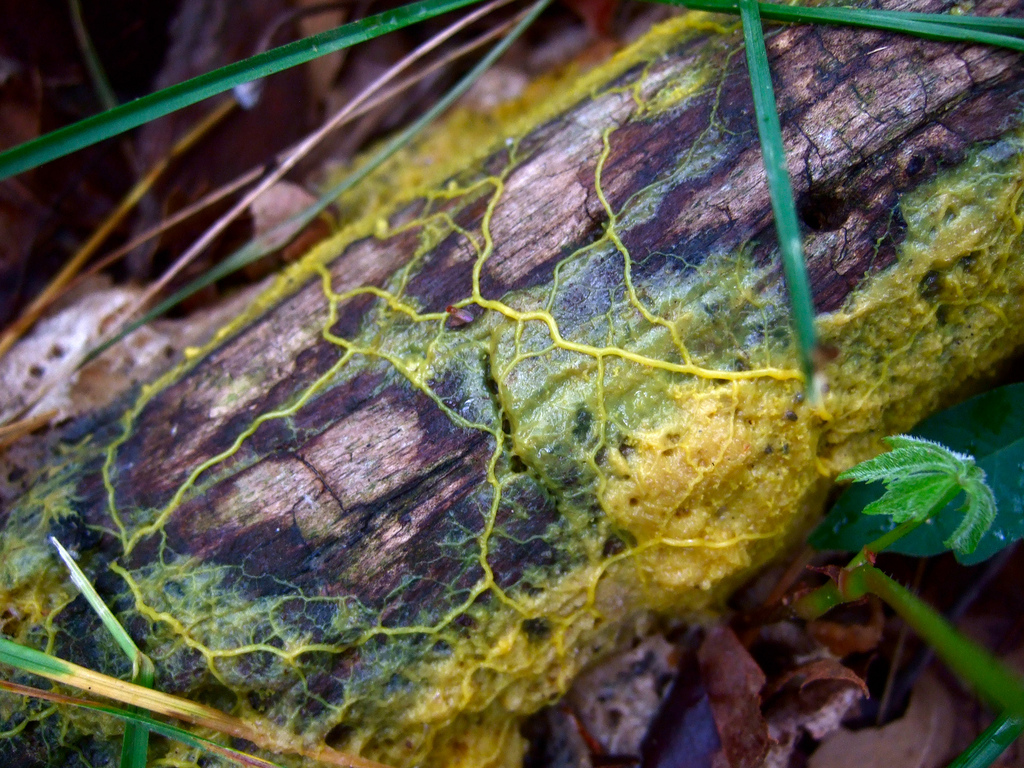
Slime mold - isn't it beautiful? (Photo courtesy of frankenstoen)
Case in point: slime molds, when following their gut, are pretty smart. Scratch that, slime molds are GENIUS. This is an oldie, but real goodie. 

Science published an article in 2010 (Tero, A. et al.) in which they looked at how organisms establish biological networks through computing their energy input, food source, and environmental obstacles - in particular, how does slime mold map out the most efficient way to get to all their food sources? If you think about trying to get to multiple places (say you are running errands on a Saturday), you ideally want to map out the most efficient route. To do so, you take in consideration different things: how far do you need to travel (should you hit Costco first, or do it on the way home?), how much gas it will cost you, and what physical barriers stand in your way (maybe there is more traffic on University at 5PM because it links to the freeway). It is a constant struggle of balancing everything in order to find the most feasible, least stressful solution to getting to your endpoint.

Even one of the most basic organism, slime mold, does this mental calculation. Slime mold naturally will seek out food sources by sending out tons of feelers into their environment (see photo below). The slime mold sends out giant nets, almost. Eventually, the slime will trim down its numerous feelers in order to direct most of its energy towards the high food sources. This redirection is a result of using the least amount of energy in order to hit all its food hot spots. 

Figure 1 from Tero paper showing slime mold calculating best trajectory to get to food sources
The slime mold is so efficient at making this calculation, that the researchers decided to put the mold to the ultimate test - if given a representative complex food source map, such as the city of Tokyo, could the slime mold map out an efficient way to hit all its food sources?

Figure 2 from Tero paper
What researchers actually saw was crazy - the slime mold was able to map out its projections to an almost spot-on map of the Tokyo rail network. In the photo above, the slime mold initially mapped out a trajectory shown in A, which doesn't quite match up to D (the actual Tokyo rail line). To simulate Tokyo's dynamic landscape (combination of high and low altitude), researchers shined a light on the areas of high altitude and put dim light on areas of low altitude, and found that the mold rerouted its trajectory to a spot-on layout to the Tokyo rail line.

Slime mold is super basic. It has no actual brain or nervous system, and is a large, single cellular ameboid organism. Its main goal in life is to troll around and find a food source. Yet, given the opportunity, slime mold can perform a complex computation solely driven by its gut response. Imagine if our guts were that smart. We should be so lucky.

This weekend I'm heading to San Diego for the annual Society for Neuroscience meeting! Planning to post some cool findings from there if I make it out alive!

Until next time, happy eating!


References:
Tero, A., et al., 2010. Rules for Biologically Inspired Adaptive Network Design. Science. 327(5964): 439-442


Sunday, October 20, 2013

Changing my senses to take the bitterness in stride

I've been upping my consumption of tea and coffee lately - mostly due to the weather changes (it's starting to look like fall here in Orange County!), but also due to looming deadlines that keep on piling up.

Photo courtesy of Onpuichunsen
I used to have to drink my coffee with loads of cream and sugar, and I'd normally take my tea with a generous helping of honey (trust me, green tea and honey > airborne in warding off a cold). Now, I can get away with coffee with some sugar, and even some black tea without honey (though honey's always welcome).

Your body has a great way of adapting to bitter tastes if necessary. Take bittermelon, or even chinese brocolli (Gai Lan) - I used to hate eating these as a kid, but my mom would make me eat a bowl of these veggies in soup form before leaving the dining table. Now, when I see these items at the farmer's market, I try to have these vegetables circulate my kitchen a couple times a month. I mean, who could resist stuffed bittermelon soup?! Most people have had gai lan while out eating dimsum - it's normally generously lathered/masked in this sumptuous oyster sauce and tastes so sweet. Gai lan in its natural form is actually the complete opposite - in the same family as brocolli, this leafy green is packed with a bitter punch. I actually prefer to steam my gai lan, or use it in a very simple shrimp soup broth over rice.

Gai lan as most people enjoy it (photo courtesy of Stu)

While it's been long established that we adapt to eating certain things for the sake of reaping the nutrients of the food, the actual "sciency" rationale behind how our brain allows us to overcome this is something more of a black box of mystery.

Recently, researchers published a cool study in Science that looked at how animals may be adapting to bitter tastes over time using.... FLIES! Okay, don't stop reading from here. Flies are pretty awesome. If you look at early developmental work, there's a ton of crazy stuff that has been discovered using flies as the animal model (such as the discovery of hox genes - these genes are important for determining how to organize body segmentation).


Despite the prevalence of a majority of neuroscience work in mice and rats, flies haven't dropped off just yet (haha, get it?). With regards to sensing food, flies are great to use for taste research since they have multiple receptors on their body that can sense different flavors - they have a ton of tiny hairlike fibers called gustatory sensilla that have different food receptors. In this study, researchers looked at the flys' ability to adapt to consuming camphor, a bitter compound that tastes like a cross between a menthol cough drop and spoonful of cinnamon (yum). What they found was that over time, flies adapted to eating camphor, but it was a result of having less of a receptor that detected that bitter compound, in this case TRPL. So did the receptor disappear forever, go on a temporary hiatus, or what? As it turns out, the amount of receptor present was being controlled - depending on consumption of the bitter compound, there would either be more or less of the receptor present. So depending on your diet, the particular receptors can be ever changing helping you blunt or heighten your responses to detecting a particular taste. This study was only done with camphor, and they found that other bitter compounds had no effect on the receptor levels, suggesting that the actual regulation of flavor detection varies considerably on what receptor you have in the sensing environment.*

This study is fairly new, and not much has been done on the human forefront, but it would be interesting to see if regulation of your tasting environment is as dynamic as the fly's. Whether it's a mind over matter type situation for humans, or if there's actually chemical regulation to control how much bitter, sweet, or salty we can handle, it's still something to keep in mind. MOH can serve as a great example to this - when we first met, he declared a few things that he'd never stand for:

1. Swimming (he'd taken tons of lessons and could never float)
2. Doing high intensity cardiovascular activity
and
3. Eating bittermelon / durian in any form, whether it's soup-ified or in ice cream form

It's been a long journey with him and there's considerable progress on his end - he will eat bittermelon if it's sauteed with some onions and eggs, and enjoys spinning to loud EDM music. I can't say much about the exercise, but I think the gradual acceptance of bittermelon has something potentially to do with a rewiring or remodeling of the chemical environment in his mouth. No status on the durian - he still thinks it smells too much like feet to enjoy.

So much hate for durians - even they need love!


Until next time, happy eating all!


***The actual molecular mechanism behind regulation of the TRPL channel is through a Ube3a mediated ubiquitination and degradation of TRPL.

References:

Zhang YZ et al., 2013. Food experience - induced taste desensitization modulated by the Drosophila TRPL channel. Nature Neuroscience. 1468-1476

Sunday, September 29, 2013

Peanut butter indulgence - eating beyond the breaking point

In honor of the Breaking Bad finale (boo), MOH and I made a special dinner of mushroom risotto and decided to indulge in one of our favorite things to snack on: peanut butter. MOH made peanut butter cookies with little cacao nibs inside - so delicious. We were worried about the cookies being too rich or dry, but these cookies were moist, had the right amount of peanut butter, and best part: were tasty! Most peanut butter cookies can be made without any flour and consist primarily of three ingredients: peanut butter, sugar, and an egg. MOH's rendition of these cookies have a slight modification of sugar, cacao nibs (for a crunchy texture), and baking soda.

Ingredients:

1 cup peanut butter
1/2 cup truvia 
1 egg
1/4 cup cacao nibs
1 tsp baking soda

Protocol:

1. Preheat oven to 325°F. Line baking sheet with parchment paper
2. In a mixing bowl, mix all ingredients until smooth. Chill dough in refrigerator for 30min
3. Using hands, roll dough into 1" balls and space ~1" apart on the parchment paper. Flatten with a fork
4. Bake for 8min in the oven. Cool on the baking sheet (not a cooling rack).
5. Eat them all! 


These cookies are addicting. The recipe makes 36, but now, there's only 9 sad cookies left on the rack. I'm full, yet I'll eat a cookie nonetheless. I'll sport my cookie belly, run for a few more minutes, just to console myself that eating that extra cookie is worth it.

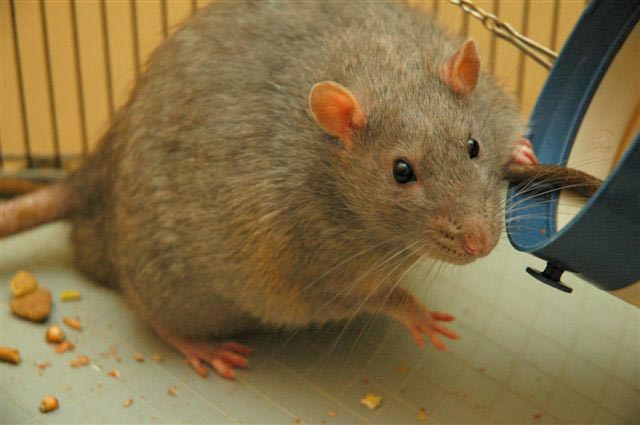
Rat that's had one too many crackers! (Photo courtesy of J. Servaes)
This week in Science, researchers published some really cool stuff on what motivates feeding behavior, whether an animal is starved or satiated. In a nutshell, researchers manipulated a pathway in the brain that is responsible for mediating feeding and observed how activation or inactivation of the pathway affected whether a rat would go for food. What they found was activation of the pathway led the rat to eat more, even when the rat was full . Conversely, inactivating the pathway led rats to eat less, even if rats were starved. For more science, scroll down to *.

Pretty crazy stuff, considering activation of a particular pathway in the brain can induce eating beyond satiation in an animal. According to this article, this is the first identified pathway that can modulate feeding behavior.

One thing that comes to mind is how many of us will reach for those extra cookies or chips even though we're way full off dinner. I think an interesting direction to go would be if this pathway mediates all types of feeding behavior or if there's a differential pathway for fatty foods, salty foods, sweet foods.


*
In this article, researchers investigated the pathway that has been implicated towards dictating feeding behavior. This pathway of the brain is called the the bed nuclei of the stria terminalis (BNST) and the lateral hypothalamus (LH). The cells in the BNST that connect to the lateral hypothalamus are primarily gabaergic inhibitory cells.

In this study, researchers used optogenetics (a method to modulate brain activation or deactivation by stimulating light on the brain region) to activate or block the pathway from the BNST to the LH. Specifically, they targeted the cells that projected from the BNST to the LH and looked to see whether rats would preferentially go to the corner of a room that either had food or was empty. Upon stimulation of this pathway, rats would preferentially go to the food corner.

In a separate test, they wanted to see if behavioral output would be changed if the rats were either full or starved. Even when rats were full, stimulation of this pathway caused the rats to continue consuming the food. In contrast, rats that were starved would not consume food if they inactivated the BNST-LH connections.


Reference:
Jennings JH et al., 2013. The inhibitory circuit architecture of the lateral hypothalamus orchestrates feeding. Science. 341(6153): 1517-21.