Friday, September 13, 2013

Salty and sour? Who'd a thunk - the versatility of lemongrass

Happy Friday!

I'm trying to incorporate postings on spotlight ingredients that are a must-have in my kitchen that not only taste great, but also are pretty darn healthy. Most of these items are asian-inspired ingredients that I've grown up eating; however, you'll find other postings on ingredients that are commonly used for vegetarian oriented meals (like my quinoa posting). 

This week, Food52 featured a column on lemongrass that really got me thinking about how great lemongrass goes with everything. Lemongrass regularly revolves around my weekly dinner menu (either infusing a hot and sour soup broth, sauteed with tofu or fish and served with rice, or sauteed with tofu and caramelized onions served over rice noodles and greens). Salty, sour, or savory, lemongrass can go with just about anything.
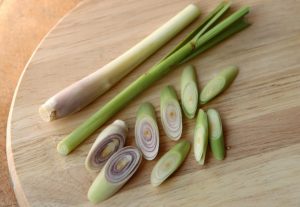


Me personally, I love a good stirfry/sautee tofu with thinly sliced lemongrass and garlic. It's got this great heat to it and has such a flavorful aroma, it's hard to beat. Alternatively, lemongrass goes great with fish and meats. Tonight's dinner menu featured a simple salad, rice and lemongrass marinated striped bass. So delicious.
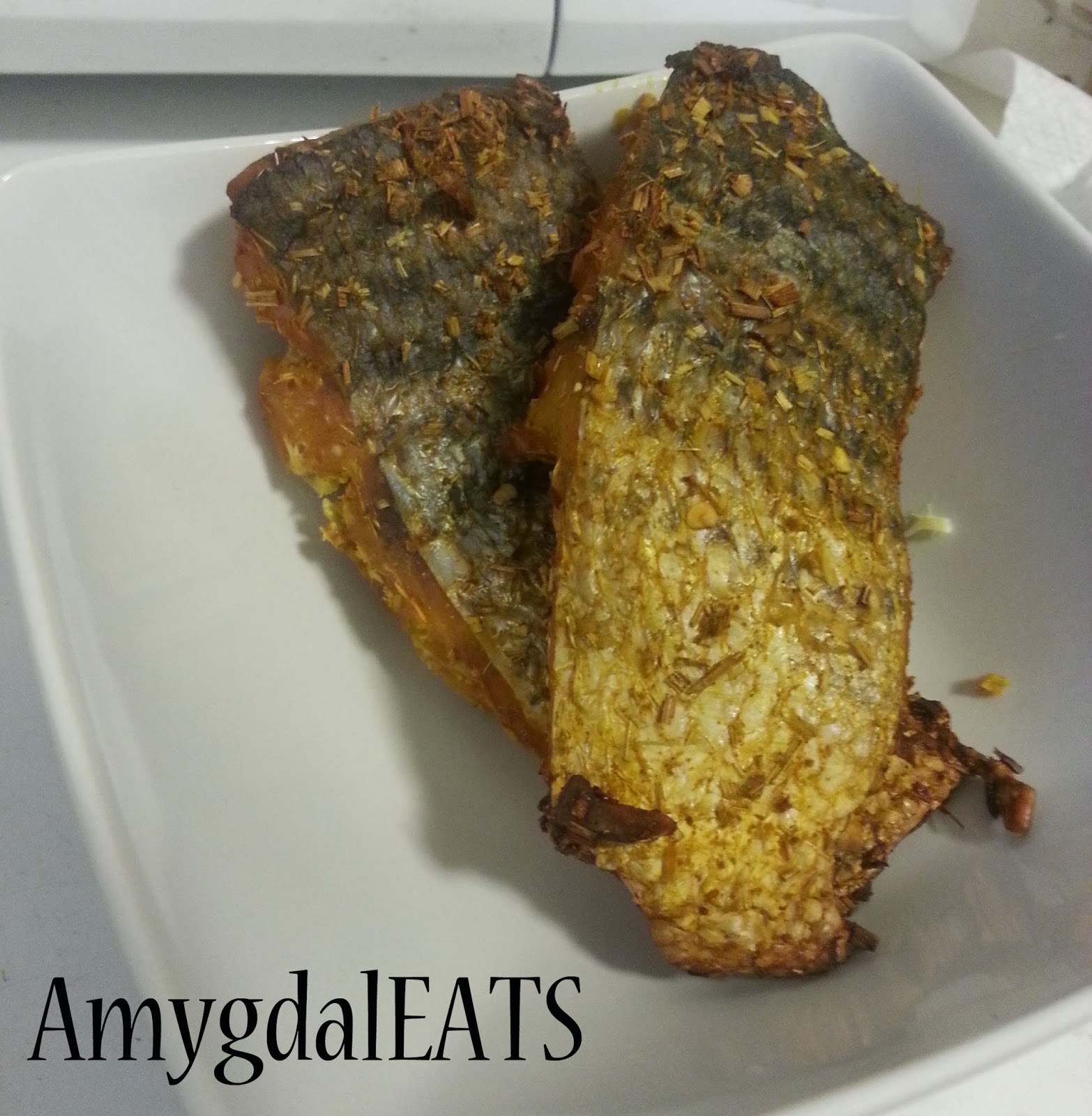


My family loves to go fishing. My parents are avid fishermen and often spend their free time off work sitting out on the water, casting the line and waiting for a bite - sometimes, when night fishing is an option, my parents will stay out and just sleep under the stars. When I was younger, I would go out with my sisters out on the boat around 6AM and we'd freeze our butts off on the boat waiting for the sun to come out. Then, eventually when the sun would rise, my sisters and I would complain about the blistering sun in the afternoon and just we'd just snack on chips and ramen while my parents patiently waited for fish to come. Of the different types of catches, striped white bass was probably one of those fish that was just a pain to catch - they'd make you wait forever and tug on the line ever so slowly. If you decided to drift off, your line would be shot. While hard to catch, bass ranks in my book as one of the best white fish varieties to eat. Bass isn't as rich tasting as salmon, but has great flakiness when you boil or poach it, and get hearty texture if you bake or fry it.

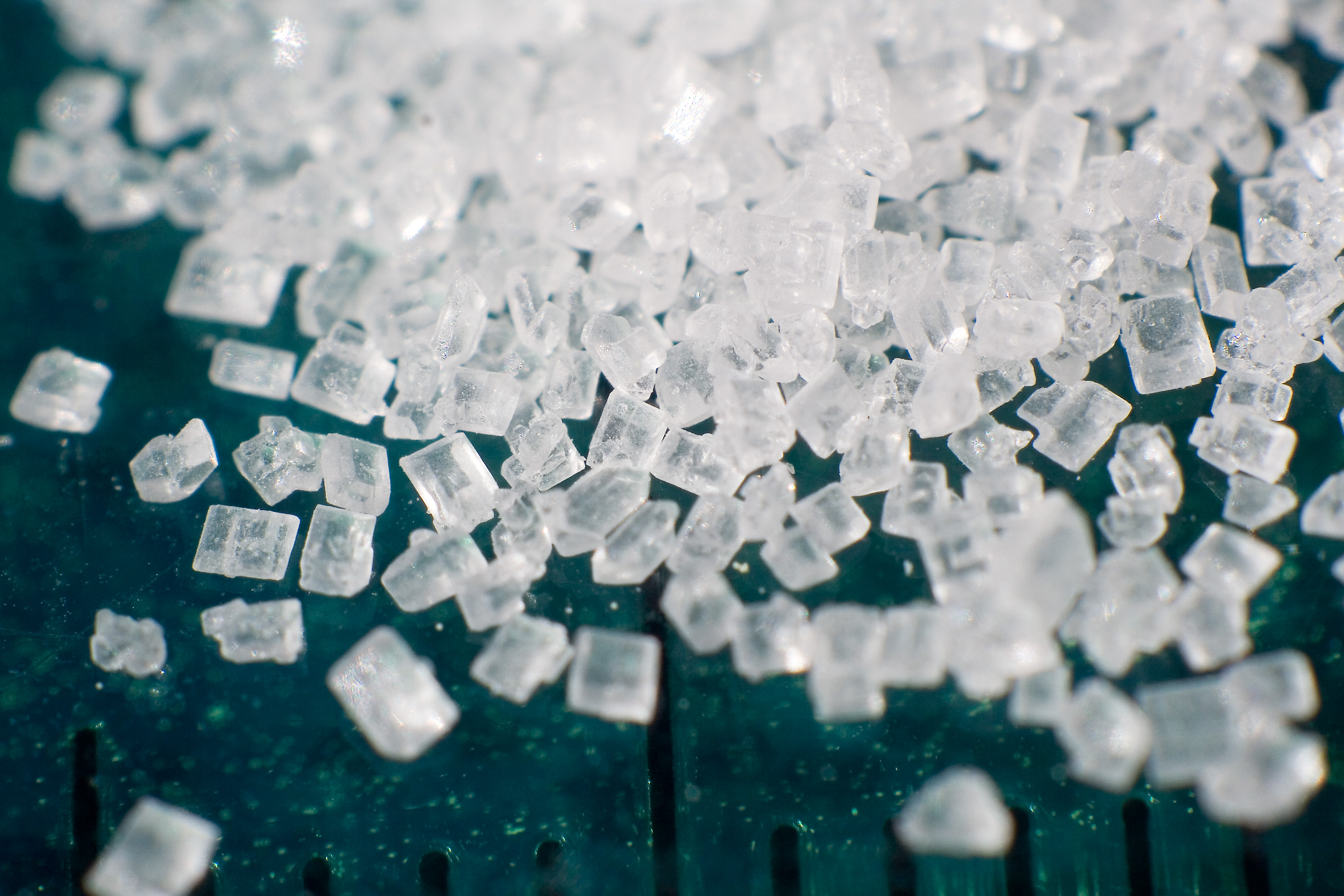
One of the best ways to prepare bass  in my opinion, is to serve it salted. Simply soak the fish in salted water for an hour (just to get the salt to penetrate). It's a really simple preparation, but you can lightly fry the fish and serve it over rice or as an accompaniment with soup (wintermelon soup tastes great with salted fish on the side). 


You can elevate salted fish even more by doing a spice rub mixture of lemongrass. Simply take lemongrass and slice or process it into tiny pieces (you can either do this laboriously with a knife, or use a food processor, your choice - I like to use a knife only because I hate cleaning the processor!). Then finely chop garlic and mix in garlic to lemongrass in a 1:1 ratio. To create a little more zest and heat, add in a few tablespoons of turmeric (if you have a cup of rub total, I'd add in 3 tbsps of turmeric. Random, the turmeric spice is also known to act as an antimicrobial, so this rub is helping to flavor your fish AND sanitize it further! If you're into spice, I'd mince thai chilis (2-3 or however hot you want it) into the mixture, or even throw in chili flakes. Mix this rub together to create a semi-homogeneous mixture of spice and slather the rub on top of the fish. 

Mix the rub thoroughly on the fish, making sure to cut into the nooks and crannies of the fish. You can choose to dehydrate the fish (like a jerky) or let the marinate stay for a bit before baking the fish or lightly frying it. 

If you choose to bake the fish, assuming you're dealing with a fillet size, simply bake in the oven at 400 degrees F for 25 minutes. Then, let the fish cool and serve over rice or a bed of greens.

Have other lemongrass recipes that are favorites in your house? Let me know!

Happy eating everyone!

Thursday, September 12, 2013

Acorn squash autumn welcome

I've been craving squash lately and staying true to form, have been eating LOTS of it. MOH's lucky though, because my craving right now only costs 88 cents a pound since squashes are in season during autumn/fall (my last craving was roasted okra which was at a slightly steeper cost of 3 dollars a pound!).

Since transitioning towards a more gluten-free diet, I've found solace on many great food blogs spotlighting gluten-free recipes. Recently, MOH surprised me with some gluten-free brownies featured in Gluten-free goddess that were both delicious and healthy! These brownies are jam packed with flavor and feature shredded zucchini, a member of the squash family, as a secret ingredient.

Squash is so versatile and can be done savory, sweet, salty and, as I recently found out, sour. There are some recipes out there on my bucket-list such as pickled squash!


For me, I really like to have my squash two ways: savory and sweet.

A great savory dish I like to do is a simple squash soup garnished with green onions. Simply use chicken stock and cut up squash of your choice (kabocha is my favorite for this) into cubes and boil until squash is tender. Then, garnish on top with green onions. Super simple, goes great with rice or even alone. If you use kabocha squash to make the soup, the soup is very sweet and savory. It tastes great on a cold chilly day.

This week, I was more in the mood for something sweet. One of my favorite things to eat on Thanksgiving is sweet candied yams. Lots of recipes call for yams traditionally topped with a generous helping of marshmallows on top of the yams. Personally, yams and squash are so good by themselves, that minimal toppings really let the squash shine! Don't get me wrong - candied marshmallow yams/squash tastes amazing, but I decided to try a more guilt-free squash option just to give my baby tummy a break.

What I tried this time was a variation of candied yams, using acorn squash, coconut oil, almonds, and coconut flakes. The result turned out better than planned, and offers a good source of protein post-workout!  And did I mention, for how filling it can be, it's gluten free?!?! This dish is jam packed with nutrition and is good for your brain, too.


While we're familiar with the jam-packed nutrition inside squash (high in vitamins and dietary fiber, low in fat), and how rich in protein almonds are,  the coconut oil here is the true star. The oil looks harmless at first glance, but studies have pointed to this oil as being part of the "good fats, oils." Coconut oil, as well as its sibling olive oil,  are part of a family called medium chain triglycerides (MCTs, basically fancy name for a fatty molecule) that can improve cognition AND help aid in weight loss (see references below). It's awesome though because I always thought of olive oil as being the main posterchild for yummy, healthy fat - now, I've discovered coconut oil, which is fragrant and slightly sweet in taste, provides similar nutritional benefit as olive oil, AND can be used in desserts! Imagine a liquified coconut... yeah, it smells and tastes just that good. (Coconut oil was also recently featured in an article in Shape magazine)


The preparation itself is pretty simple. All in all, the prep is less than 15 minutes.

Protocol:

Coconut candied acorn squash:
- 1 acorn squash
- 1/3 cup of almonds, chopped
- 1/2 cup coconut flakes
- 3 tbsp brown sugar (add more sugar if you want it more sweet, but coconut flakes and oil should suffice your sweet tooth!)
- 3 tbsp coconut oil

1.Preheat oven to 400 degree F
2. Boil squash in a pot until tender (10 minutes, but you can check the tenderness with a fork)
3. Chop almonds
4. Drain squash and cut up into slices or chopped into cubes - place in a plastic mixing bowl
5. Add coconut flakes, brown sugar, and coconut oil and coat evenly - don't worry about the overpowering smell of coconut oil - it will taste great after you've finished baking
6. Place in glass baking pan (the type you roast potatoes with) and bake for 20-25 minutes, basically until you notice the coconut slightly browning
7. Let cool, and serve!


References:

Page KA et al., 2009. Medium-chain fatty acids improve cognitive function in intensively treated type 1 diabetic patients and support in vitro synaptic transmission during acute hypoglycemia. Diabetes. 58(5): 1237-44.

Pan et al., 2010. Dietary supplementation with medium-chain TAG has long-lasting cognition-enhancing effects in aged dogs. British Journal of Nutrition. 103(12): 1746-54.

St-Onge MP et al., 2003. Medium-chain triglycerides increase energy expenditure and decrease adiposity in overweight men. Obesity Research. 11(3):395-402.

Saturday, September 7, 2013

Bun rieu, a feast for the eyes (food marathon weekend)


Hey everyone,

I meant to write while on vacation, but I was swamped with family time and before I knew it, the week was over and no blog post had been written! This vacation back North was really relaxing. I missed MOH immensely, but had lots of time to reflect, relax, and just soak in time with my family.

Photo courtesy of Sangster
I spent a majority of my time hanging out with family, running along the delta reservoir with my sisters in the early AM, and eating really good food. Food at every corner, always waiting for me. Ugh, food. Such good food. I knew this weekend would be filled with tons of food, so I made an effort to run every day just to prep my tummy for the gorge fest. My weekend began with a piping hot bowl of bun rieu (Vietnamese crab noodle soup) with fresh herbs garnished on top. Probably my favorite Vietnamese dish is hu tieu (seafood noodle soup), but bun rieu comes a close second because of the sweet depth of flavor the tomato-y broth has.


Growing up, I loved eating bun rieu's more popular sister pho way more because of its pungent assertive broth and hearty meat toppings- I mean, who couldn't resist the choice of tripe, ribeye, meatball, or shredded chicken atop rice noodles? I didn't start to love bun rieu until I got older and began to appreciate the immense complexity with a subtle flavor profile that kind of creeps up on you, like the slow heat behind good chili. The broth is composed of a chicken base with shrimp/crab paste, broiled tomatoes and onions and is super rich (good recipe below). For me, what really sets bun rieu apart as such a great dish is the vegetable herb toppings that sit on top of the noodles - you can have coiled morning glory, unripened banana blossom, shredded cabbage, refreshing bean sprouts, and an assortment of herbs (mint, basil, tia to or Vietnamese Perilla, to name a few).

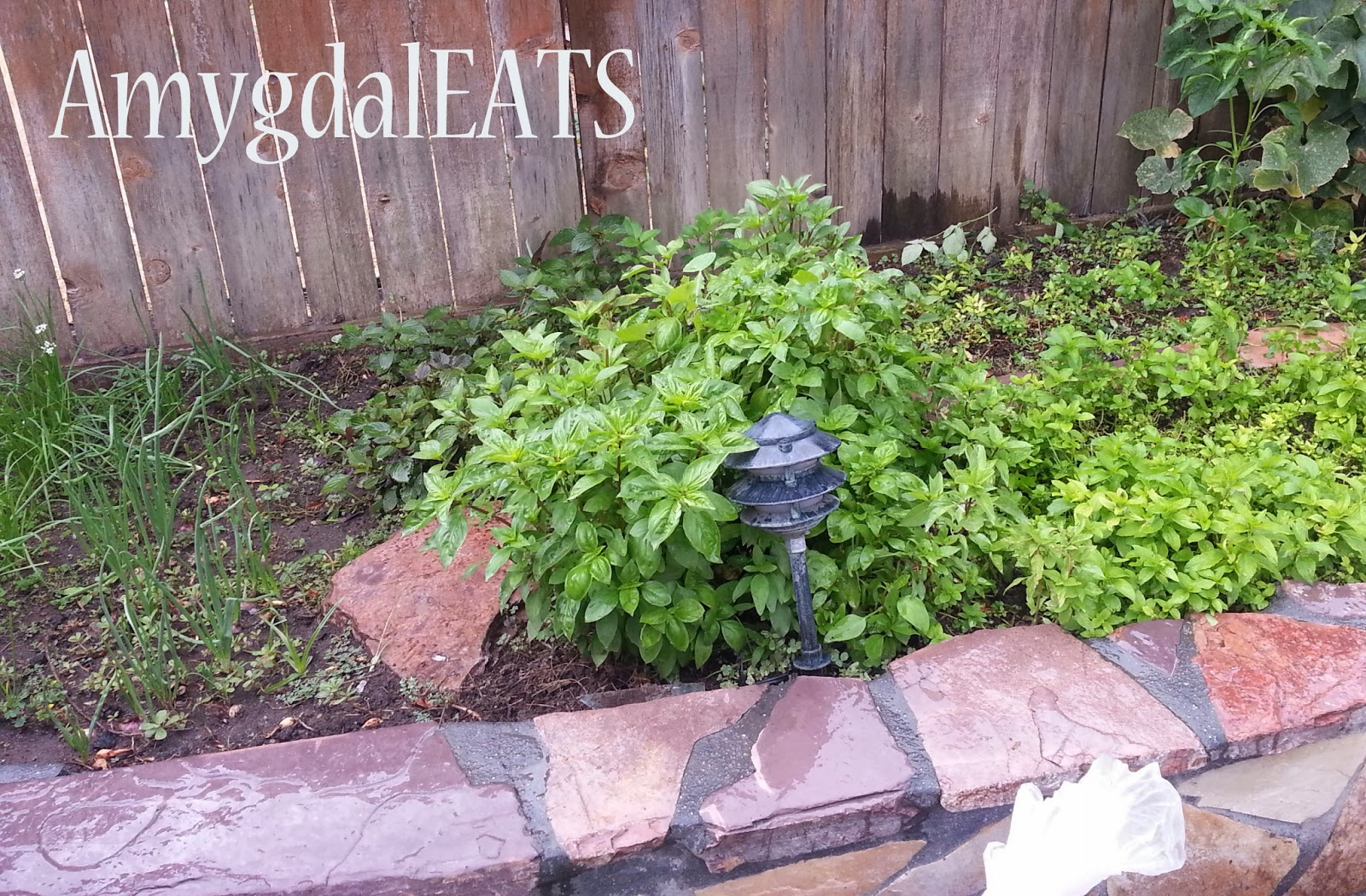
Small section of my mother's garden
Unlike pho, bun rieu doesn't use hoisin or sriracha sauce; instead, you use fermented shrimp paste as a salting agent and fish sauce. Both good things in my book!

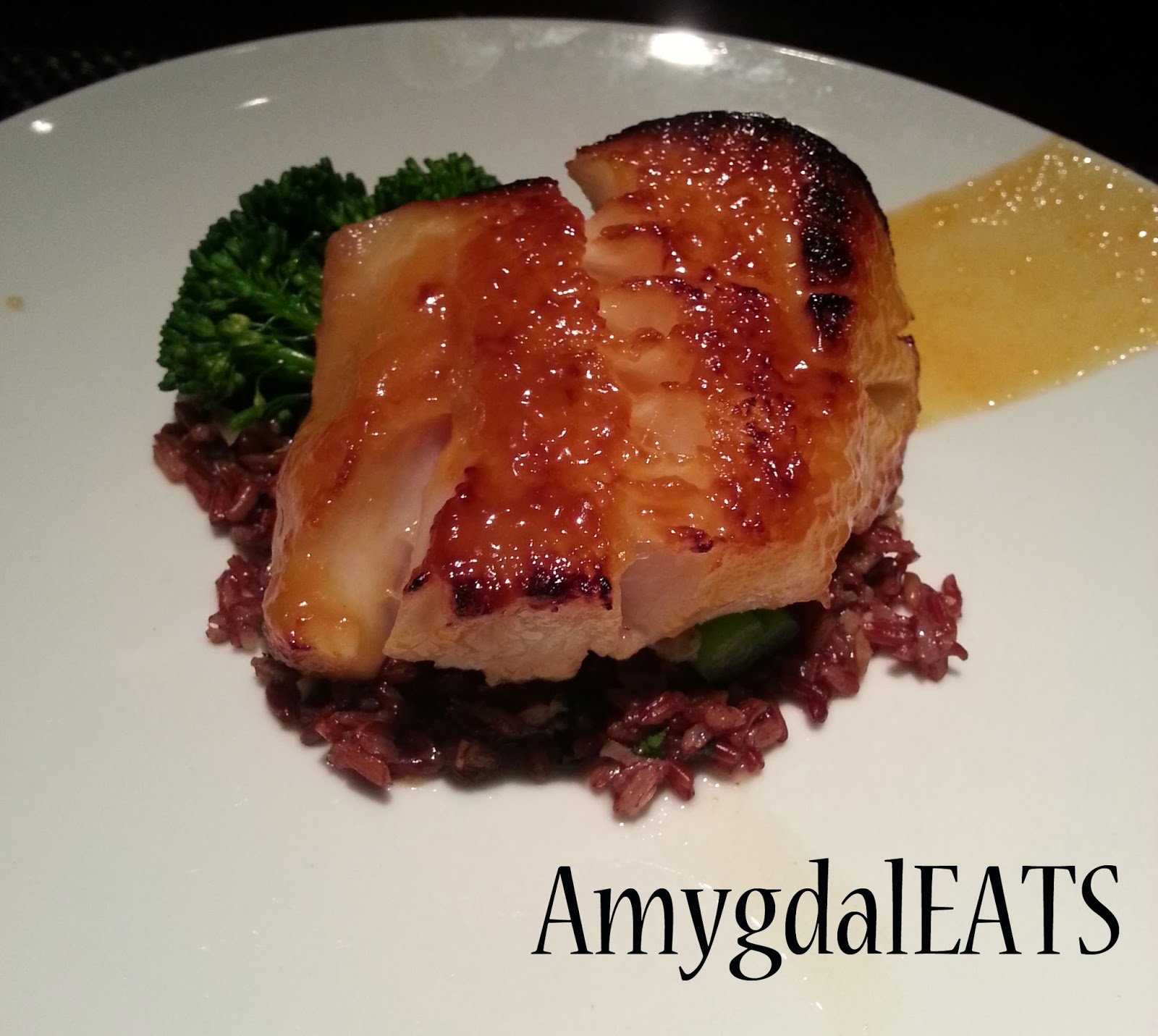
Needless to say, the bowl of bun rieu my mom made for me was both a feast for the eyes and mouth alike! Doesn't the photo look so good? Besides the obvious taste and smell of food, food needs to look good. Now, food isn't just deemed "yummy" based on how it tastes. You can have a perfectly delicious cake that is just oozing with flavor, but if it looks like say, the undead, chances are that some people may be deterred from eating your lovely creation.

The importance of how good food looks has a neural basis as well. A recent study in Journal of Neuroscience recently showed that certain brain regions are activated when we look at appetizing versus unappetizing food items. In this study, researchers at Cambridge University were interested in studying how different personalities affect a subject's desire to eat after viewing appetizing food. Specifically, the researchers looked at "external food sensitivities" or EFSs. EFS refers to the range by which some of us are motivated to eat or seek food upon seeing food - studies have shown that people with high EFS, or higher susceptibility to be vulnerable to eating after seeing food, are more likely to be obese and overeat. As EFS can be different for everyone (some of us are more apt to go for that chocolate bar when we see chocolate cake compared to the few select who can contain themselves), the researchers looked at the activation of brain regions in response to seeing food.


This study was conducted using functional magnetic resonance imaging (fMRI), a useful technique to image different brain regions in a non-invasive manner. Simplified, fMRI detects blood flow through the brain, and uses that as a correlation of which brain regions are being more activated (more blood flow) or less activated (less blood flow) compared to a basal, resting state. Subjects were categorized according to their EFS score and were shown various images of either appetizing (cake, cookie) or bland (rice, potato) food, and imaged during this testing session.

Example of fMRI: blue is less activated and yellow is more activated brain regions. (Photo courtesy of RA Muller)
The first task was to look at what neural regions are being activated upon seeing appetizing food. Different regions were activated such as the amygdala, ventral striatum and ventral anterior cingulate cortex - these regions have also been implicated in food processing.

***For more on the scientific findings, scroll down to the very bottom.


Though I'm not a neuroimaging specialist, these results are interesting nonetheless. I've always wondered if there was any science behind the saying "eat with your eyes," and it turns out the main areas activated upon seeing appealing food happens to coincide with areas of your brain that are important for managing memory and emotion. Whether these regions are being activated because you get excited when seeing certain foods (emotional), or whether the regions are being activated because you remember a certain memory associated with the food (memory), remains unknown.

These findings though separate people according to EFS - those with higher EFS are more apt to overindulge while those with lower EFS have more self-control. No shame, but I'm thinking I'm in the high EFS range. My weekend home was an overindulgence fiesta. I ate and ate. And when my mom brought more food to the table, I ate again. Just looking at her creations made my mouth water and made me fill up my bowl again, sigh. My last meal ended with lau chua (sour soup hot pot), a delicious hot pot variant with all the right fixings: squid, red snapper, tofu. Delicious with every bite, the food was definitely tasty as visually appealing.

Until next time, happy eating everyone!

To try your own bun rieu recipe, try this recipe from the  Ravenous Couple.


*** Additional findings from paper:

They then asked if subjects with a higher EFS had changes in connectivity between brain regions important for food processing (i.e. it's whether people who are more likely to eat after seeing food had stronger neural connections underlying motivation to eat). Individuals with a higher EFS had less connectivity between the brain regions important for food process and feeding behavior - these results are similar to the results done in feeding studies done on rodents. While the findings are still new, these results suggest that decreased connectivity between brain regions could lead to abnormal, or more chaotic neural cross-talk, which could make subjects more susceptible to overindulge. I thought there would be MORE connectivity, as in a heightened sense of neural cross-talk for people who tend to eat more or have a higher EFS. Needless to say, more research is underway to further investigate the neural correlates to motivation to eat.

References:
Passamonti L. et al. 2013. Personality predicts the brain's response to viewing appetizing foods: The neural basis of a risk factor for overeating, Journal of Neuroscience. 29(1):43-51.


Saturday, August 24, 2013

Traditions and gluten-free insanity

No matter what anyone says, everyone will always attest to the delicious first-rate food their mother makes. You're probably familiar with the common conversation of "no seriously, my mom makes THE BEST..." It's about another week until I go back to my hometown to spend Labor Day weekend with my family and I couldn't be more excited. Usually, a trip back to see my family entails this great tradition of eating large family-style meals. Things like claypot caramelized catfish (ca kho), lau canh chua (sweet and sour hot pot), and seafood noodle soup (hu tieu) are classics that frequently circle through family dinners every month.

Ca kho to - a favorite in my book! (photo courtsey of T. Haynes)
My visits to see my family, though not often, are filled with lots of catching up with both personal news, as well as catching up with eating good food. For us, eating at the table together just generates good conversation - there's something about everyone being present, sharing a meal, that really brings people closer and creates this great intimacy. When I was growing up, no matter what you did in the day, whether you had math tutoring, or went fishing with family friends, or went to hang with friends to eat, you HAD to be home for dinner. If you ate already, no one cared, you had to sit at the table and be present for the conversation. Because in my family, the dinner table was where most of the conversations happened - conversations of laughter, heartache, love, loss, teen angst, to family drama. These conversations happened around an old school 6-person wooden table that had newspapers strewn across the table top instead of place mats (ghetto-ish, but highly effective at absorbing any fish sauce spills).


The only downer about this visit is I happen to be in the midst of a gluten elimination diet to try to pinpoint some annoying symptoms that I've been experiencing for the past year. A year ago, I decided for health reasons to cut out meats from my diet and switch my diet to a more plant-based, grain diet. As a result, my body started to react weirdly to it, and I think it may be a gluten reaction. So I just saw a physician about this and am doing a two week elimination diet as one method of trying to figure out what's going on with my body. I've also done two other tests, so hopefully a result will come out before I head back to Stockton. Either way, this gluten-free diet has been a major bummer - I never knew just how much "wheat" by product there was in food - it's in EVERYTHING. It was bad enough trying to get over not eating bread (I love eating bread with avocado on top, yum!), but wheat flour can be found hidden in many asian sauces (hoisin, oyster sauce, etc.). Needless to say, I've been going through a rollercoaster of emotions because of this dietary adjustment - I'll be happy after a day of not experiencing stomach pains, headaches, or bad gas and think wheat may be the root of my problems, but then I'll be sad the next day when I realize that I can't eat my rice dishes with oyster sauce because there's a wheat flavoring thing in it!

My favorite brand of oyster sauce (photo courtesy of K. Louie)
Anyways, MOH, supportive as ever, has been noticing my sulking around the apartment, sadly reading labels of all my favorite food seasonings, sighing whenever I look at bread, and has concocted a delicious little gluten-free dessert for me - before you question the validity of my statement "delicious," especially for something gluten free, keep in mind that the batch is all gone and it's only been two days. I came back from a run and smelled this yummy wafting coconut-crispy-cookie goodness and immediately thought of this cookie I had at the australian bakery, Pie-not, the digger. 

The digger, otherwise known as the Australian and New Zealand Army Corps (ANZAC) biscuit, was a baked delight that was used during WWI as a main source of sustenance for the soldiers on the warfront. Baked with love by wives, aunts, grandmommys, sisters, friends, these biscuits were created as a healthy source of sustenance for soldiers, with an added bonus that the cookies would withstand storage for long periods of time. The basis of this biscuit involves oats, flour, sugar, butter and this great honey-alternative, golden syrup. One thing you'll notice is there's no eggs in this cookie, adding to how well it stores for long bouts of time. The cookie to this day, is still considered a traditional biscuit and can be found in many specialty bakeries as homage to its great historical significance. 


MOH's rendition of the ANZAC was modified from an online (site featured below) using gluten-free flour. He was super worried about the results, but the cookie was so good!

MOH's ANZAC:
- 1 cup flour (Red Mill, gluten-free all purpose flour)
- 1 cup oats
- 1 cup brown sugar
- 1/2 cup coconut flakes
- 9 tbsp of butter
- 2 tbsp golden syrup
- 1 tbsp water
- 1 tsp baking soda

1. Preheat oven to 325 degree F
2. Stir in flour, oats, coconut, and sugar  in a mixing bowl
3. Melt butter and add in syrup to water
4. Add baking soda to butter mixture
5. Add dry mixture (1) to liquid mix (2 and 3)
6. Scoop walnut size balls of the mix and bake onto baking sheet for 10 minutes - be careful, the walnut size is small, but the cookie spreads A LOT! The end product is this cookie crisp-like biscuit, so make sure the dough balls are 4-5inches apart!

I think the only thing to watch out for is how thin this cookie gets - it's very sweet and tastes like a crispy oatmeal galette. Really tasty and goes great with coffee and tea. If you like your cookies more rounded out, many gluten free sites suggest using xantham gum as a solidifying agent.

Needless to say, MOH's little surprise has greatly lifted my spirits in the wake of this gluten-free personal challenge. This blog has been about keeping up with traditions, and MOH's staying true to his form. Ever supportive, my little baker has managed to find silver linings through anything. Awesome end to a long week.

Hope everyone's enjoying their weekend. Happy eating all!


Interested in making your own ANZAC? If so, use the following recipe:

Saturday, August 17, 2013

Will you be eating alone, or meeting someone?

This week marks Costa Mesa's restaurant week, which means it's time for MOH and I to venture out of our favorite food spots and try some of the hidden gems of Costa Mesa. Restaurant week happens in many cities, often highlighting great food from awesome restaurants at an affordable lunch or dinner prix fixe menu.

Yesterday MOH and I went to Pie-not, this Australian bakery that serves delicious savory pies.

Beautiful pies (courtesy of J. Spengler)
Pie-not had this awesome special where you can have their signature pie with a cookie and coffee all for 8 bucks. I would definitely recommend this place - the pies are crusty, have a great buttery taste, and have such a decadent savory filling. The pie that I had was the gandhi which had curried chickpeas and vegetables - super good! And if you're not into pies, get the Digger biscuit, which tastes like a crispy oatmeal cookie - really delicious and great with a cup of coffee. Our experience yesterday was a great start to restaurant week, and we're excited to try other places. We've compiled a list of a few places, but we'll be lucky if we can hit all our spots. Fingers crossed!

The great thing about restaurant week is you can plan girls' nights or date nights or catch-up with friends and family at great places to eat. It's always a lot of fun when you can spend time with loved ones, especially over good food. And if you're like me, a total "awkward turtle," a new study recently published in Plos One (Sommer et al., 2013) has shown that eating in the company of another person compared to eating solo helps you become more in tune with reading other people's emotions and serves to enhance your mood. Talk about being productive on all ends.


This study was conducted by researchers in Madrid and Germany and looked at the cognitive and emotional consequences of eating alone, or eating with another person in a restaurant setting. While there's been mounting empirical as well as anecdotal evidence for the benefits of eating with company, no studies have actually explored the realm of how cognitive processes are affected between the two eating habits. Here, they compared two types of groups: eating restaurant prepared take-out inside an office cubicle versus walking to said restaurant with a coworker and having a meal inside the restaurant. Only the social factor of eating with company was considered different between the two groups.

In this study, researchers looked at effects on mood, memory and emotional context between the two groups using an imaging technique known as electroencephalography (EEG). EEG works by taking a summation of all your brain's electrical activity as a way of figuring out which parts of your brain are being stimulated during particular activities. EEG is a really great way to measure brain activity in humans in particular because it's non-invasive and subjects only need to wear a cap with little electrodes (look like plug extensions) that will measure electrical activity.

EEG in action - tres stylish? (photo taken from P. Kallioinen) 
What they found was that people in the experimental group (named EG, the group that dined with a coworker) had a better mood than the control group (named CG, solo eaters). In addition, EG people had an easier ability to detect negative emotions on faces - what they did for this test was present random faces and had the subjects indicate the emotion presented on each face. The EG people responded much quicker and correctly than the CG group. Memory was looked at too, but both groups had similar responses.

Now, crunching down the findings, the mood results seem plausible and even make sense. Think about how great you feel after dining with a friend, or coworker. Maybe you get to vent out your frustrations regarding work or get some sound advice about life; maybe you become inspired to take your research project in a different direction after bouncing off ideas with a fellow colleague; or even maybe you feel secretly excited and happy when you hear from a friend that your ex is wishing they never broke up with you. Either way, dining with another can be a great experience and serious mood uplifter.

Photo courtesy of T. Monto
But what about the results of reading emotions? This came across really interesting to me. If I'm assuming that reading emotional context on faces can be extended to being able to socialize better with various groups, presumably, by eating out with my few select friends, I can potentially enhance my social skills... This sounds like a win-win situation to me. Not sure if we can extrapolate and make this stretch, but if it justifies eating out more, trying different foods, and spending quality time with friends and family, why not?

Hope everyone's enjoying their weekend - until next time, happy eating!


Reference:
Sommer et al., 2013. How about lunch? Consequences of the meal context on cognition and emotion. Plos One.


Saturday, August 10, 2013

Izakaya and Sandman love this week

Happy weekend everyone!

MOH and I haven't had a date night in awhile, so we decided to have a spur of the moment, mid-week celebration of archery, comics, and IZAKAYA! Archery, comics, and Izakaya? Maybe the first two things sound familiar, but what in the world is izakaya?

Izakaya refers a Japanese eating style that reminds me most of a combination of the bar scene where tapas are served in great varieties. If you're into guzzling down sake, or munching on apps the entire night, or scarf down sushi bits and pieces, eating izakaya-style is something that you should definitely try at least once.


MOH and I went to this newly opened Izakaya hotspot in Fountain Valley, CA called Kappo Honda and had a great time. The thing about izakaya that's so wonderful is there's something for everyone here. Ever tried to set up lunch or dinner plans with friends and get frustrated with trying to choose a place that fits everyone's dietary needs? The beauty of Izakaya is it offers a wide variety of tapas that can cater to anyone - sushi, sashimi, salads, tempura, takoyaki (ball-shaped snacks filled with octopus, squid or shrimp), yakitori (skewered meat or vegetables), udon, ramen, and sukiyaki (japanese hot pot). There's something here for everyone. Or if you just want to try everything, no shame in doing that either! Typically, MOH and I love to get a little bit of everything, like an informal prix - fixe menu.

Yakitori: squid legs, quail eggs, and pork belly!

Our meal was so delicious. MOH had worked up an appetite shooting his new bow at Orange County Archery and we were so excited about trying out this place. We ordered a few rolls, some yakitori, sashimi, takoyaki, and wasabi flavored sea snails. The sea snails were probably my favorite dish. It had this great kick to it - the snails had a real kick to them. The snails are braised or boiled (?) and then coated with this great wasabi paste that makes it taste like this great antipasto to a delicious meal of sushi rolls and sashimi-galore. I could probably eat two more orders of this, and for people who are kinda ehh about eating snails, it tasted like squid or octopus! The rest of the meal was really good, but by far my favorite was the wasabi snails.  

Bit blurry, apologies - but SO good
On top of a great meal, this has been an amazing week for me. I've fallen in love with the beauty of comics.

I've started the Sandman series written by Neil Gaiman and it is AMAZING. Yes, I know - comics? You?!?! Read COMICS?!?!?!? The series is a revival of the Sandman series retold by the hit writer behind Coraline, Neil Gaiman. He manages to infuse rich mythology, classic comic heroes / villains (the appearance of Scarecrow and Dr. Destiny) into this really deep story of the Lord of Dreams aka Sandman. I was hesitant to read this series, but I've already finished the first volume (ten total) and find myself thinking about it constantly. It's kind of like food dreaming - ever dream of this dish that you NEED to have? I'm experiencing that currently with a book series. And did I mention the artwork is amazing? Needless to say, I've enlisted MOH's great ebay/internet scouring skills to helping me find the best deal on the rest of this series. Excited!


Hope everyone's doing well this week - happy eating all!

Sunday, August 4, 2013

Addicted to the taste

This week has been filled with lots of indulgences - I've eaten four batches of kale chips, scarfed down some double-stuffed oreos, and eaten through more than my fair share of kettlecorn chips. Ay. If it weren't for running and cycling, I think I'd be looking like jabba the hut instead of sporting a soft "maca-doodle." (MOH likes to poke at my belly and call it a hybrid between a macaron and snickerdoodle- induced belly, hence "macadoodle")


There's just something about certain foods that just make even the strongest person cave in. For some people, it's a rich german double chocolate cake. For MOH, it's mint oreos. I think for me, it's salty chips. I love chips. Whether it's kale chips, potato chips, shrimp frys, hot cheetos, any chip variety will do me in. But for some people, that special craving, or pang to "just have it" goes a little more than just giving into temptation and having a snack. For some, food addiction is a very serious disorder, and often leads to several health concerns, the most important being obesity. Obesity, especially that in the United States, is ever increasing, affecting 30% of the population. As a result, food addiction is something that's a hot research topic in neuroscience, particularly because there are parallels of food addiction to drug addiction. What do I mean by this? Food addiction shares similar pathways as drug addiction does, in which many of the brain regions that are activated during food intake are the same regions that are activated during drug ingestion. While taking drugs "hijack" our brain's natural reward pathways, food addiction has been linked to activating many neural networks, making it extremely complicated to study.

DiLeone RJ et al., 2012 Nature Neuroscience

The diagram above shows the dual pathways of both drugs of abuse, and food addiction. Each site represents a brain region. The lighter shaded areas represent areas that are activated during food addiction. The darker shades are activated during drug addiction. While drugs of abuse activate the Ventral Tegmental Area (VTA) and intake of food activates the hypothalamus, the Nucleus Accumbens (NAc) serves as a site that integrates both food and drug intake.

So that leads to the next pressing question - do oreos hold higher power than a cigarette? While no studies have actually been done in humans to compare this (drat), rats when given a choice of either a sugary compound or a cocaine hit actually opt for the sugar high rather than the drug high. Even in a situation when the animal isn't hungry, a rodent will still choose sugar rather than the cocaine.


Why does food hold such high power? Some researchers hypothesize that the intense desire and evolutionary advantages to seek out and consume foods of high quality fat and sugar has led many brain pathways to respond positively to food intake.


References:

DiLeone RJ et al. 2012. The drive to eat: comparisons and distinctions between mechanisms of food reward and drug addiction. Nature Neuroscience.